A clean home feels calmer, healthier and more welcoming, but keeping on top of housework can feel endless. The secret is not cleaning harder; it is cleaning smarter with a simple routine. A house cleaning checklist breaks the work into small, manageable tasks by room and frequency, shares the jobs among the household and lets everyone see at a glance what has been done this week and what still needs attention.
Our free house cleaning checklist template for Excel organizes tasks for the kitchen, living room, bathrooms, bedrooms and the whole house. Each task has a frequency (daily, weekly or monthly), a person responsible and tick boxes for Monday to Sunday, plus an automatic count of tasks completed and space for notes and supplies. Preview it below, download the XLSX file and set up a cleaning routine that works for your home.
Download the free house cleaning checklist
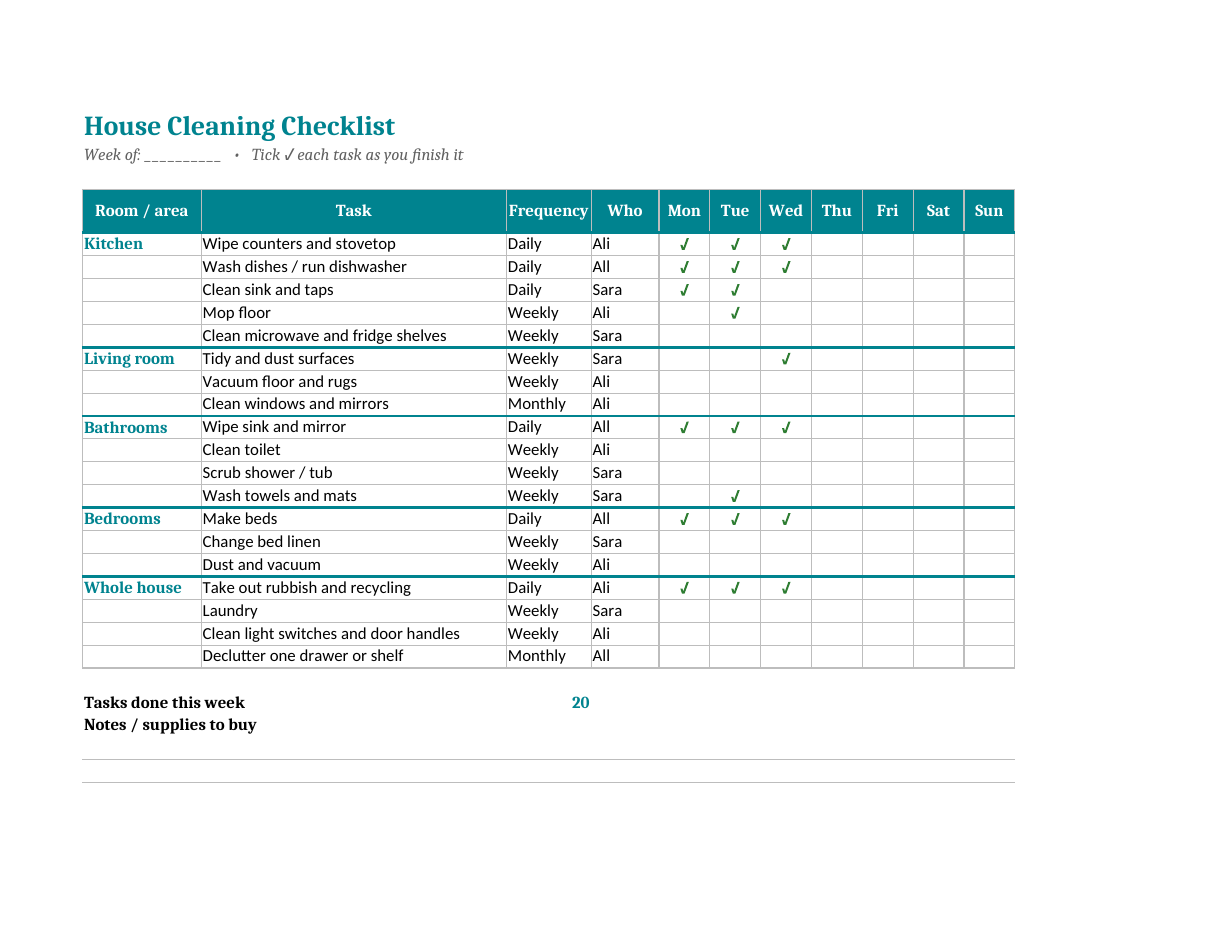
The spreadsheet works in Microsoft Excel, Google Sheets, LibreOffice Calc and Numbers. Edit the tasks and names, then print a copy each week and stick it on the fridge, or tick tasks on your phone or tablet using the drop-down boxes.
Features of the cleaning checklist
- Room-by-room sections: kitchen, living room, bathrooms, bedrooms and whole house.
- Twenty common cleaning tasks ready to use or edit.
- A frequency column with a drop-down for daily, weekly, monthly or seasonal.
- A "Who" column for sharing chores among family members or housemates.
- Monday to Sunday tick boxes with a ✓ drop-down.
- An automatic "tasks done this week" counter.
- Space for notes and cleaning supplies to buy.
- A printable landscape layout on one page.
How to use the cleaning checklist
- Download the template and open it in Excel or Google Sheets.
- Walk through your home and note the tasks each room needs.
- Edit, add or remove tasks to match your home.
- Set the frequency for each task.
- Assign each task to a person, sharing the work fairly.
- Print the checklist or save a copy for the week.
- Tick each task on the day you complete it.
- Check the "tasks done" counter at the end of the week.
- Add supplies you are running low on to the notes section.
- Start a fresh copy every Monday.
Daily cleaning tasks
Daily tasks take only a few minutes each but make the biggest difference to how your home feels. They prevent mess from building up and make weekly cleaning much quicker.
- Wash dishes or run the dishwasher.
- Wipe kitchen counters and the stovetop.
- Clean the kitchen sink and taps.
- Wipe the bathroom sink and mirror.
- Make the beds.
- Take out the rubbish and recycling.
- Do a quick ten-minute tidy before bed.
Weekly cleaning tasks
- Mop kitchen and bathroom floors.
- Vacuum carpets, rugs and floors.
- Dust surfaces, shelves and electronics.
- Clean the toilet, shower and bathtub.
- Change bed linen and wash towels.
- Clean the microwave and wipe fridge shelves.
- Wipe light switches, door handles and remote controls.
- Do the laundry.
Monthly and seasonal tasks
- Clean windows and mirrors.
- Wash curtains or blinds.
- Clean inside the oven.
- Defrost and deep-clean the fridge and freezer.
- Vacuum upholstery and under furniture.
- Clean ceiling fans and light fittings.
- Declutter drawers, wardrobes and cupboards.
- Wash bins and clean drains.
- Flip or rotate mattresses.
A simple weekly cleaning schedule
If you prefer to spread the weekly work out rather than doing it all at once, assign one area to each day. For example: Monday – kitchen deep clean; Tuesday – bathrooms; Wednesday – dusting and vacuuming living areas; Thursday – bedrooms and laundry; Friday – floors; Saturday – a monthly task; Sunday – rest and plan the week. With daily tasks added, you will rarely spend more than 30 minutes a day cleaning.
Sharing chores fairly
Cleaning is easier and fairer when everyone helps. Use the "Who" column to share tasks among family members or housemates. Match tasks to age and ability: young children can make beds and tidy toys, teenagers can vacuum and take out the rubbish, and adults can handle bathrooms and kitchens. Rotate unpopular jobs each week so nobody is stuck with the same chores. Seeing ticks build up on the checklist is also motivating for children.
Cleaning tips that save time
- Clean from top to bottom so dust falls onto areas you have not cleaned yet.
- Work from dry to wet: dust and vacuum before mopping.
- Keep a caddy of supplies so you can move quickly between rooms.
- Let cleaning sprays sit for a minute to loosen dirt before wiping.
- Use microfibre cloths, which trap dust and need less product.
- Clean as you go when cooking.
- Set a timer and do as much as you can in 15 minutes.
- Declutter regularly; less stuff means less to clean.
Essential cleaning supplies
- All-purpose cleaner.
- Glass and mirror cleaner.
- Bathroom and toilet cleaner.
- Dishwashing liquid.
- Microfibre cloths and sponges.
- A vacuum cleaner and mop.
- Rubber gloves.
- Bin bags.
- A scrubbing brush and old toothbrush for corners.
Always read product labels, store chemicals safely away from children and never mix bleach with other cleaning products.
Customizing the checklist
Every home is different. Add rows for a home office, laundry room, balcony, garage or garden. Remove tasks you do not need. If you have pets, add tasks such as cleaning litter trays, washing pet bedding and vacuuming pet hair. For a rental move-out clean, add tasks such as cleaning inside cupboards, wiping skirting boards and cleaning the oven. You can also create separate sheets for weekly and monthly tasks.
Cleaning checklist for busy households
When work, school and family life are hectic, focus on the tasks that make the biggest difference: dishes, kitchen counters, bathrooms and rubbish. A quick daily reset in the evening keeps the home under control, and a single longer session at the weekend covers the rest. If the checklist feels too long, start with just five tasks and add more as the habit grows.
Kitchen cleaning in detail
The kitchen is usually the room that needs the most attention, because food, grease and moisture create mess quickly. Each evening, load the dishwasher or wash up, wipe the counters and stovetop, and rinse the sink so it is clean for the morning. Once a week, mop the floor, wipe the fronts of cupboards and appliances, clean the microwave and throw out old food from the fridge before wiping the shelves. Once a month, clean the oven, descale the kettle, wash the bin and clean the extractor fan filter. Breaking the kitchen down like this stops grease and grime building up and keeps the room hygienic.
Bathroom cleaning in detail
Bathrooms stay fresh with a few minutes of daily care. Wipe the sink, taps and mirror after use, hang towels to dry and open a window or run the fan to reduce damp. Weekly, clean the toilet inside and out, scrub the shower or bath, wipe tiles and glass, wash bath mats and replace towels. Monthly, wash the shower curtain, clean grout, wipe the extractor fan and check under the sink for leaks. Keeping a spray bottle and cloth in each bathroom makes quick cleans easy for everyone in the household.
Motivating yourself to clean
Starting is often the hardest part. Put on music or a podcast, set a timer for fifteen minutes and see how much you can do; most people continue once they get going. Tackle the most visible area first, such as clearing the kitchen counters or making the bed, for an instant sense of progress. Reward yourself afterwards with a coffee or a walk. Ticking tasks on the checklist and watching the weekly counter rise is a simple but surprisingly effective motivator, especially for children and teenagers.
Frequently asked questions
Is this cleaning checklist free?
Yes. Download, edit and print it as often as you like.
Can I use it on my phone?
Yes. Open it in the Excel or Google Sheets app and tick tasks from the drop-down boxes.
How do I add more tasks?
Insert a row in the right room section and type the task, frequency and person. Copy the tick boxes from the row above.
How often should a house be deep cleaned?
Many households do a deep clean every few months or at the change of seasons, with regular weekly cleaning in between.
Can I use the checklist for a cleaning business?
Yes. Replace the "Who" column with the cleaner's name and use one copy per client property.
What is the fastest way to clean a messy house?
Start by clearing clutter and rubbish, then wash dishes, wipe kitchen and bathroom surfaces, and finally vacuum and mop floors. Work room by room and avoid getting distracted by deep-cleaning tasks.
Should I clean every day?
A few minutes of daily tidying and wiping keeps the home pleasant and makes the weekly clean much faster and easier.
Related templates
- To-do list templates
- Weekly planner templates
- Weekly schedule templates
- Daily schedule templates
- Packing list template for Excel