
A weekly schedule turns a busy week into a clear, visual plan. Instead of juggling classes, shifts, appointments, workouts and family commitments in your head, you can see every day at a glance and spot free time, clashes and overloaded days before they cause stress. Whether you are a student balancing lectures and revision, a nurse managing clinical rotations, a parent organizing children's chores or a professional protecting time for focused work, a well-designed weekly schedule template saves time and keeps you on track.
Below you will find a collection of free, printable weekly schedule templates, including a time management study schedule, a healthy lifestyle weekly planner, a bi-weekly recycling collection schedule, a weekly chore schedule for kids and a class and clinical schedule. Preview each design, download the editable file and use our guide to build a weekly routine that actually works.
Download free weekly schedule templates
Download weekly schedule templates:

Three downloads are ZIP archives containing ready-to-print PDF files: the study schedule, the healthy planner and the recycling schedule. The kids' chore schedule ZIP contains an editable Word (DOCX) file, and the class and clinical schedule is a Word DOC file you can open directly in Microsoft Word, Google Docs or LibreOffice Writer.
What is a weekly schedule?
A weekly schedule is a planning tool that maps your commitments across the seven days of the week, usually with time slots running down the side and days across the top. It shows when you are busy, when you are free and how your time is divided between work, study, rest and personal life. Unlike a to-do list, which only records tasks, a weekly schedule assigns each activity a specific time, making it far easier to follow through.
Templates in this collection
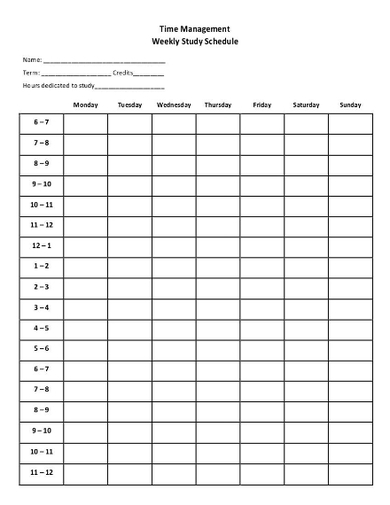
Time management weekly study schedule
A printable PDF for students with hourly rows from 6 AM to midnight for every day of the week, plus fields for your name, term, credits and the number of hours you plan to dedicate to study. It is ideal for planning lectures, independent study and revision, especially during exam season.
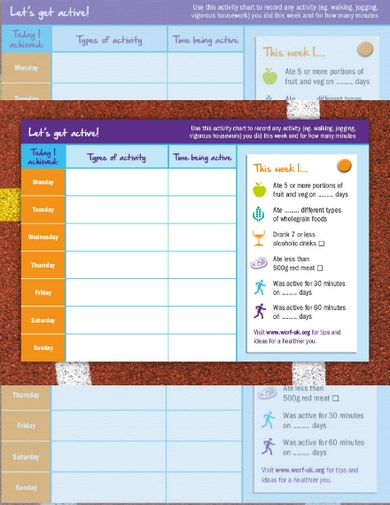
Healthy new you weekly planner
A 44-page printable PDF planner published by the World Cancer Research Fund. It combines healthy eating and physical activity guidance with weekly planning pages, so you can set wellbeing goals, plan meals and activity and track progress week by week.
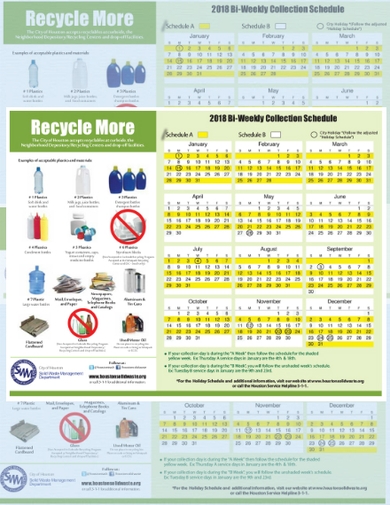
Bi-weekly recyclable collection schedule
A sample bi-weekly collection calendar from the City of Houston's 2018 recycling programme, showing alternating Schedule A and Schedule B weeks, holiday adjustments and accepted materials. Use it as a layout example for your own household, building or office collection rota; always check your local council for current collection dates.
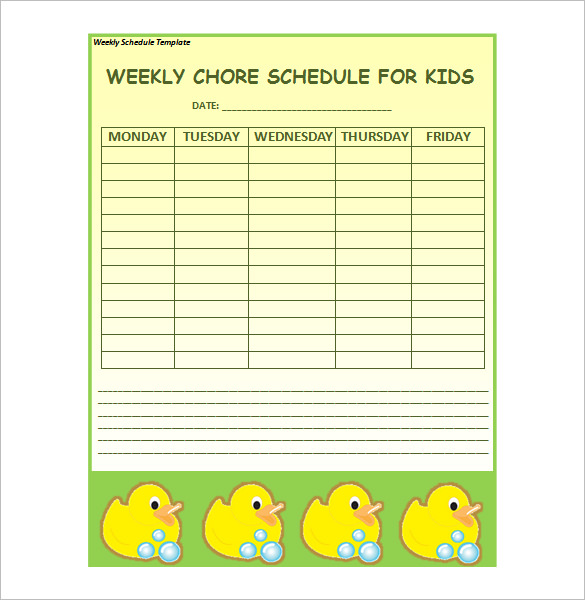
Weekly chore schedule for kids
An editable Word chore schedule for kids. Enter age-appropriate chores for each day of the week and let children tick off completed tasks, which builds responsibility and reduces daily reminders.
Class and clinical weekly schedule
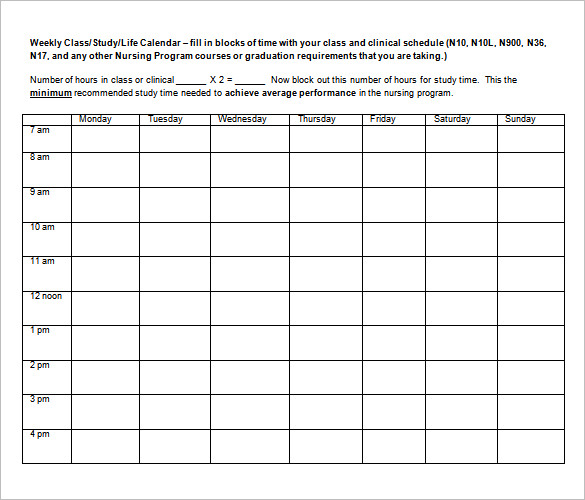
A Word weekly class, study and life calendar created for nursing students, with hourly rows from 7 AM to 9 PM for Monday to Sunday. You block in class and clinical hours, multiply them by two and then block out that many study hours, a simple rule for protecting enough revision time. It works equally well for medical and allied health students.
Benefits of using a weekly schedule
- See your entire week at a glance and avoid double-booking.
- Make time for priorities instead of reacting to whatever comes up.
- Balance work, study, family, exercise and rest.
- Reduce stress and decision fatigue by knowing what comes next.
- Identify wasted time and free slots for important tasks.
- Build consistent routines and habits.
- Share plans with family members, classmates or colleagues.
- Track how you actually spend your time and improve over the weeks.
How to create an effective weekly schedule
- Choose the template that best fits your needs, such as study, health, chores or work.
- Write the week beginning date at the top so you can keep and compare past schedules.
- Enter fixed commitments first: classes, work shifts, appointments, meetings and travel time.
- Block time for your top priorities, such as revision, deep work or exercise, at times when your energy is highest.
- Add recurring routines like meals, school runs, household chores and sleep.
- Leave buffer time between activities for transitions, delays and short breaks.
- Schedule rest and leisure, including at least one free evening or half day.
- Use colours or highlighters to group activities by category.
- Review your schedule each evening and adjust the next day if plans change.
- At the end of the week, reflect on what worked and plan the next week.
Weekly schedule vs. weekly planner
The terms are often used interchangeably, but there is a useful distinction. A weekly schedule focuses on time: it places commitments into specific hourly slots so you know exactly where you need to be. A weekly planner focuses on priorities and goals: it lists the tasks, deadlines and outcomes you want to achieve during the week, often without exact times. Many people use both together, setting goals in a planner and then scheduling the time to achieve them. If you prefer goal-focused planning with habit tracking and a weekly review, see our weekly goal planner template.
Time management techniques to use with your schedule
Time blocking
Divide your day into blocks dedicated to a single activity or type of work, such as "9 to 11 AM: assignment writing". Time blocking reduces multitasking and helps you focus.
The Pomodoro technique
Work in focused 25-minute sessions followed by 5-minute breaks. Mark Pomodoro blocks on your study schedule to keep revision sessions productive.
Eat the frog
Schedule your most difficult or important task first thing in the day, when willpower is highest.
Batching
Group similar tasks, such as emails, errands or phone calls, into a single slot instead of scattering them throughout the week.
Energy mapping
Notice when you feel most alert and schedule demanding work for those hours, saving routine tasks for low-energy periods.
Weekly schedule ideas for different needs
- Students: lectures, study sessions, assignments, part-time work and exam revision.
- Teachers: classes, lesson planning, marking, meetings and extracurricular duties.
- Healthcare workers: clinical shifts, on-call rotas, training and rest days.
- Parents and families: school runs, activities, meals, chores and family time.
- Employees: meetings, project work, commuting and professional development.
- Freelancers: client work, admin, marketing and invoicing.
- Fitness and health: workouts, meal prep, sleep schedule and self-care.
- Households and offices: cleaning rotas, bin collection and maintenance tasks.
Tips for sticking to your weekly schedule
- Be realistic. Overfilled schedules quickly collapse; plan for about 80% of your available time.
- Keep the schedule visible, on your desk, fridge or phone lock screen.
- Plan the week on Sunday evening or Monday morning.
- Treat important blocks like appointments you cannot miss.
- Include travel time and preparation time.
- Do not schedule every minute; leave flexibility for the unexpected.
- Reward yourself when you stick to the plan.
- Review and adjust weekly instead of abandoning the schedule after one bad day.
Making a chore schedule work for kids
Children respond well to clear expectations and visible progress. Assign chores that match each child's age, such as making the bed or feeding pets for younger children and washing dishes or vacuuming for older kids. Use pictures for children who cannot yet read, and let kids tick a box or add a sticker when a chore is complete. Rotate chores weekly to keep things fair and interesting, and consider a small reward for a fully completed week. Post the chart somewhere visible, such as the fridge, so the whole family can see it.
How to edit and print the templates
After downloading, extract the ZIP file by right-clicking it and choosing Extract All on Windows or double-clicking it on a Mac. Print the PDF schedules directly, or open the Word files and click into any cell to type. You can change fonts, colours and time intervals, or add rows for earlier or later hours. To print, choose landscape or portrait orientation to match the template and select Fit to page if needed. For a reusable schedule, print the blank template and laminate it, then use dry-erase markers to update it each week. You can also upload the file to Google Drive and edit it in Google Docs, or keep a digital copy on your phone.
Digital vs. printable weekly schedules
Digital calendars send reminders and sync across devices, while printed schedules are always visible and help many people remember commitments better because they write them by hand. A good approach is to use a digital calendar for appointments and a printed weekly schedule on your desk or fridge for the overall plan. The PDF templates are ready to print for the wall, while the Word templates can also be kept and updated as editable documents on your computer.
Frequently asked questions
Are these weekly schedule templates free?
Yes. All templates are free to download, edit and print for personal, school or work use.
How do I open the ZIP files?
Right-click the ZIP file and choose Extract All on Windows, or double-click it on a Mac, then open the PDF or Word document inside.
Can I edit the templates in Google Docs?
Yes. Upload the Word file to Google Drive and open it with Google Docs. Check the layout before printing, as some formatting may shift slightly.
What time intervals should I use?
One-hour intervals work for most people. Students and busy professionals may prefer 30-minute slots for more detail.
How often should I update my weekly schedule?
Plan once a week and review it briefly every evening. Fixed commitments can stay the same, while flexible blocks change week to week.