Selling a car, motorcycle, laptop, furniture or equipment privately is often quick and simple, but the paperwork matters. A bill of sale is the written record that proves the item changed hands, at what price and on what date. It protects the seller if the buyer later gets a parking fine or claims the item was misrepresented, and it gives the buyer proof of ownership for registration, insurance and resale. A clear, signed bill of sale prevents disputes and makes the transfer official.
Our free bill of sale template for Microsoft Word covers motor vehicles and general personal property. It includes seller and buyer details, an item description with registration, chassis and engine numbers, price and payment method, an "as is" condition clause, ownership warranties, transfer of ownership and risk, and signature blocks with a witness line. Preview it below, download the editable DOCX file and follow our guide. This template is a general sample, not legal advice; requirements vary by location.
Download the free bill of sale template
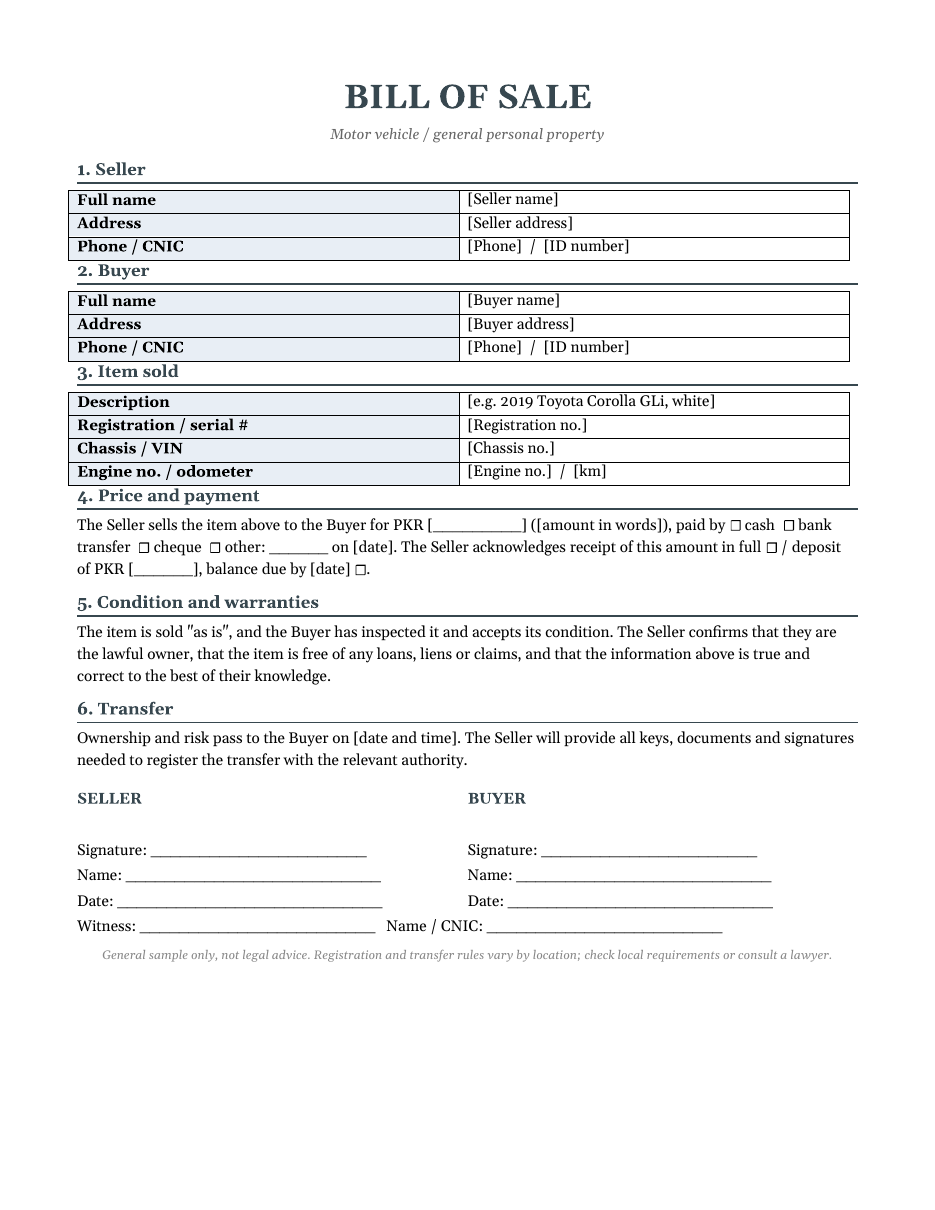
The template opens in Microsoft Word, Google Docs, LibreOffice Writer and Pages. Fill in the bracketed fields, print two copies and have both parties sign each one.
What is a bill of sale?
A bill of sale is a legal document that records the transfer of ownership of personal property from a seller to a buyer. It lists the names of both parties, describes the item, states the price and date of sale and is signed by both sides. Bills of sale are most commonly used for vehicles, but they are useful for any valuable item, such as boats, trailers, machinery, electronics, livestock, furniture and musical instruments.
What the template includes
- Seller name, address, phone and ID number.
- Buyer name, address, phone and ID number.
- Item description, registration or serial number, chassis or VIN and engine number or odometer reading.
- Sale price in figures and words.
- Payment method checkboxes: cash, bank transfer, cheque or other.
- Options for full payment or a deposit with a balance due date.
- An "as is" condition clause.
- Seller warranties of ownership and freedom from loans or claims.
- Transfer of ownership and risk with date and time.
- Signature blocks for seller and buyer and a witness line.
- A short legal disclaimer.
How to fill out a bill of sale
- Enter the seller's full legal name, address, phone and ID number.
- Enter the buyer's details in the same way.
- Describe the item clearly: make, model, year, colour and any distinguishing features.
- For vehicles, copy the registration, chassis and engine numbers directly from the registration documents.
- Record the odometer reading at the time of sale.
- Write the sale price in figures and words.
- Tick the payment method and record whether the price was paid in full or as a deposit.
- Read the condition clause together and note any known defects.
- Enter the date and time ownership and risk pass to the buyer.
- Sign and date the document in front of a witness if possible.
- Give one original to each party and keep copies of ID and payment proof.
Vehicle bill of sale tips
- Check that the seller's name matches the registration documents.
- Compare the chassis and engine numbers on the car with the documents.
- Ask for the service history and any outstanding loan clearance letter.
- Record the exact time of handover; responsibility for fines and accidents changes at that moment.
- Complete the official transfer of registration with the relevant authority as soon as possible.
- Hand over all keys, the registration book and any warranty documents.
- Cancel or transfer insurance on the day of sale.
- Pay or receive payment by bank transfer for a clear record.
"As is" sales explained
Most private sales are "as is", which means the buyer accepts the item in its current condition and the seller does not guarantee it will work perfectly in the future. The buyer should inspect the item carefully, test it and, for vehicles, consider an inspection by a mechanic before buying. However, an "as is" clause does not allow a seller to hide known problems or lie about the item. If you know of a defect, write it in the description so the buyer cannot later claim they were misled.
Example: selling a used car
Imagine you are selling a 2019 sedan. You enter your details and the buyer's, copy the registration, chassis and engine numbers from the registration book and record the odometer reading. You agree a price, the buyer pays by bank transfer and you tick "paid in full". You both sign two copies at 3:00 pm on the day of sale, and a friend signs as a witness. You hand over the keys and documents, and the buyer completes the registration transfer. If the buyer receives a traffic fine at 5:00 pm the same day, your bill of sale proves the car was no longer yours.
Bill of sale for other items
The template works for many items beyond vehicles. For electronics, list the brand, model and serial number. For furniture, describe the item, material and condition. For equipment and machinery, include the serial number, hours used and any accessories. For animals, describe the breed, age, markings and any registration or vaccination records. Replace the vehicle-specific fields with details that identify your item.
Protecting yourself as a seller
- Meet in a safe public place or with another person present.
- Verify the buyer's identity and keep a copy of their ID.
- Accept payment you can verify, such as a cleared bank transfer.
- Do not hand over the item until payment is confirmed.
- Remove personal data from phones, laptops and vehicle systems.
- Keep a copy of the signed bill of sale.
Protecting yourself as a buyer
- Inspect the item carefully and test that it works.
- Check ownership documents and that the seller has the right to sell.
- Ask about any loans, liens or claims against the item.
- Pay by a traceable method and get a receipt.
- Make sure all identifying numbers on the item match the documents.
- Register the transfer promptly where required.
Gifts and family transfers
A bill of sale can also record a transfer between family members or a gift. In that case, write a nominal price or "gift" in the price section and add a short note explaining the transfer. Some authorities require specific forms for gifted vehicles or charge different fees, so check the local rules before completing the registration. Recording the transfer in writing still protects both parties and makes the change of ownership clear for insurance and future sales.
Legal disclaimer
This bill of sale template is a general sample for information only and does not constitute legal advice. Rules on vehicle transfers, registration, taxes, notarization and consumer protection vary between countries and regions. Check local requirements and consult a qualified lawyer for high-value or complex sales.
Documents to keep after the sale
After signing, both parties should keep a small file for the sale. The seller should keep a signed copy of the bill of sale, a copy of the buyer's ID, proof of payment and a note of the handover time. The buyer should keep the original bill of sale, the registration and ownership documents, any service records and receipts, and the confirmation of the registration transfer once it is complete. Keeping these documents for several years makes it easy to resolve questions about fines, taxes, insurance claims or future resale.
Frequently asked questions
Is this bill of sale template free?
Yes. Download, edit and print it for private sales.
Does a bill of sale need to be notarized?
It depends on where you live and what you are selling. Many private sales do not require notarization, but some vehicle and boat transfers do. Check local rules.
Is a bill of sale the same as a receipt?
A receipt confirms payment, while a bill of sale confirms both payment and the transfer of ownership, with details of the item and both parties.
Do I still need to transfer the registration?
Yes. A bill of sale supports the transfer, but for vehicles you must usually complete the official registration process as well.
Can I use the template for a deposit?
Yes. Tick the deposit option, enter the deposit amount and the date the balance is due.
What if the buyer pays in instalments?
Record the deposit, the balance and the due dates, and consider using a separate promissory note for the instalment plan. State whether ownership passes now or only when the final payment is made.
Should I write the odometer reading?
Yes, for vehicles. Recording the reading at the time of sale protects both parties and is required in some places.
Can I sell an item that still has a loan on it?
Only with the lender's agreement, and usually the loan must be paid off first. Ask for a clearance letter from the lender before completing the sale.
Related templates
- Agreement templates
- Cash receipt template
- Invoice templates
- Quotation templates
- Certificate of origin templates