
What you eat affects your energy, mood, sleep and long-term health, but most people underestimate how much and how often they really eat. A food journal brings clarity. By writing down meals, snacks and drinks, along with portions, nutrients and how you felt, you start to notice patterns and make better choices. Food journals are popular for weight management, healthy eating goals, sports nutrition and identifying foods that cause discomfort.
Our free food journal template for Excel lets you log each meal with time, food, portion, calories, protein, carbs and fat, plus hunger and mood. Daily totals calculate automatically and compare against your targets, and there are sections for water, exercise, sleep and a short reflection. Preview it below, download the XLSX file and start building healthier habits. This journal is a self-tracking tool, not medical advice; talk to a doctor or registered dietitian about specific health needs.
Download the free food journal template
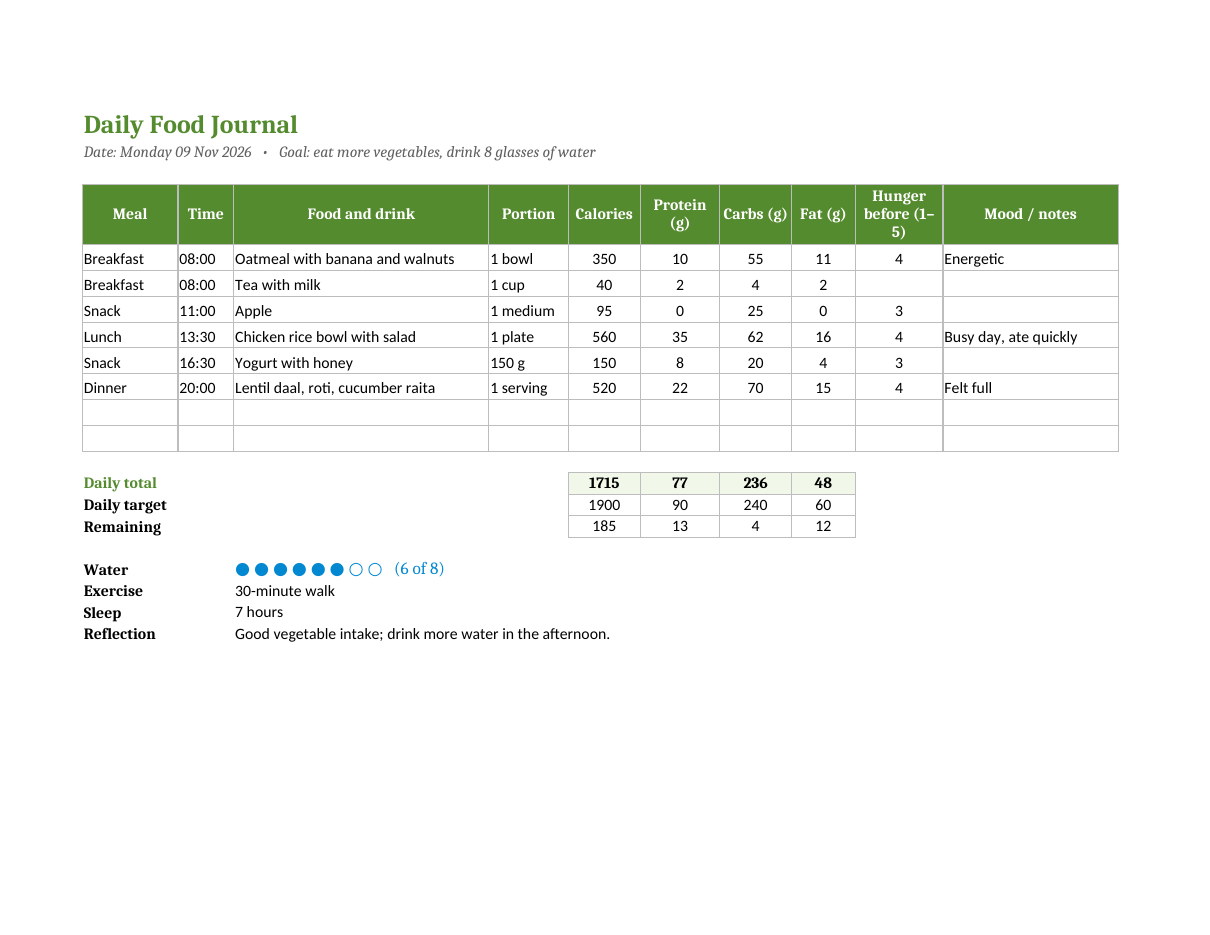
The spreadsheet works in Microsoft Excel, Google Sheets, LibreOffice Calc and Numbers. Fill in a new copy each day or duplicate the sheet for each day of the week.
What is a food journal?
A food journal, or food diary, is a daily record of everything you eat and drink. A simple journal lists foods and times; a more detailed one adds portions, calories and nutrients, along with hunger, mood and notes. The act of writing things down encourages mindful eating and helps you see the link between food and how you feel. Over a few weeks, a journal reveals habits that are hard to notice otherwise, such as skipping breakfast, late-night snacking or low vegetable intake.
What the template includes
- Date and personal goal for the day.
- Meal type and time.
- Food and drink description.
- Portion size.
- Calories, protein, carbs and fat for each item.
- Hunger rating before eating (1–5).
- Mood and notes.
- Automatic daily totals for calories and macronutrients.
- Daily targets and remaining amounts.
- Water tracker for eight glasses.
- Exercise, sleep and an end-of-day reflection.
How to keep a food journal
- Set a simple goal, such as eating more vegetables or drinking more water.
- Enter your daily targets for calories, protein, carbs and fat, if you track them.
- Record each meal, snack and drink as soon as possible after eating.
- Note the time and a portion estimate, such as "1 bowl" or "150 g".
- Look up nutrition values from food labels or a nutrition database.
- Rate your hunger before eating from 1 (not hungry) to 5 (very hungry).
- Add notes about mood, setting or how you felt afterwards.
- Check the daily totals and remaining amounts in the evening.
- Mark glasses of water, exercise and sleep.
- Write a one-line reflection on what went well and what to change.
- Review a full week of journals to spot patterns.
Estimating portion sizes
You do not need a kitchen scale to keep a useful journal. Use simple visual guides: a portion of meat or fish is about the size of your palm; a portion of rice or pasta is about the size of your fist; a portion of cheese is about the size of two thumbs; and a portion of fats, such as butter or oil, is about the size of a fingertip. Weighing food occasionally helps you calibrate your estimates.
Understanding macronutrients
Protein
Builds and repairs muscles and helps you feel full. Sources include meat, fish, eggs, dairy, lentils, beans and tofu.
Carbohydrates
The body's main energy source. Choose whole grains, fruit, vegetables and legumes more often than refined sugar and white flour.
Fat
Important for hormones and absorbing vitamins. Favour nuts, seeds, olive oil and fish over fried and processed foods.
Calorie and macronutrient needs vary with age, sex, size, activity and health. The sample targets in the template are examples only; a healthcare professional can help you set targets that suit you.
Example day
The sample journal shows a balanced day: oatmeal with banana and walnuts for breakfast, an apple mid-morning, a chicken rice bowl with salad for lunch, yoghurt in the afternoon and lentil daal with roti and raita for dinner. Totals come to 1,715 calories, 77 g protein, 236 g carbs and 48 g fat, slightly below the example targets. The reflection notes good vegetable intake and a reminder to drink more water in the afternoon.
Benefits of keeping a food journal
- Raises awareness of what and how much you eat.
- Helps with weight management goals.
- Reveals emotional or stress eating patterns.
- Identifies foods linked to bloating, headaches or low energy.
- Supports sports and fitness nutrition.
- Helps you plan balanced meals and shopping lists.
- Provides useful information for a doctor or dietitian.
- Encourages mindful, slower eating.
Tips for success
- Write entries soon after eating; memory is unreliable by evening.
- Be honest; the journal is for you.
- Include drinks, sauces, cooking oil and small bites.
- Focus on patterns over perfection.
- Plan meals for the next day based on what you learn.
- Celebrate progress, such as more vegetables or fewer sugary drinks.
- Take breaks if tracking starts to feel stressful.
Using the journal to find food sensitivities
If certain foods seem to cause discomfort, use the notes column to record symptoms and when they appeared. Over a few weeks, look for foods that regularly appear before symptoms. Share the journal with a doctor or dietitian before cutting out whole food groups, as they can recommend safe ways to test sensitivities and make sure your diet stays balanced.
Mindful eating and hunger ratings
The hunger rating column encourages you to pause before eating and notice how hungry you really are. Eating when you are moderately hungry (3–4) and stopping when comfortably full helps many people manage portions naturally. If you often eat at a hunger level of 1 or 2, the notes may reveal that boredom, stress or habit is the trigger. Simple changes, such as drinking a glass of water first, eating without screens or eating more slowly, can make a big difference.
Planning meals with your journal
A food journal is not only a record of the past; it is also a great planning tool. At the end of each week, look at your entries and notice which meals kept you full and energetic and which left you hungry soon after. Use those insights to plan the next week's meals and write a shopping list. If afternoons are a weak spot, plan a healthy snack such as fruit, nuts or yoghurt. If dinners are often rushed, prepare ingredients in advance at the weekend. Planning with real data from your journal makes healthy eating far easier.
Tracking water, exercise and sleep
Food is only part of the picture. Water, movement and rest all affect appetite and energy. The water tracker lets you fill in a circle for each glass, making it easy to see whether you are drinking enough. Recording exercise and sleep helps you spot links, such as eating more on days after poor sleep or feeling hungrier after a long walk. Over time, you can use these patterns to build routines that support your goals, such as drinking a glass of water with every meal or going to bed at a regular time.
Food journals for families and children
Parents can use a food journal to see whether children are eating a balanced range of foods, especially if they are fussy eaters or have allergies. Keep the journal simple: list meals, snacks and drinks, and note any reactions or likes and dislikes. Older children and teenagers may enjoy keeping their own journal as a way to learn about nutrition. Focus on variety, fruit and vegetables and regular meals rather than calories, and speak to a paediatrician or dietitian if you have concerns about growth or diet.
Frequently asked questions
Is this food journal template free?
Yes. Download, edit and use it every day.
Do I need to count calories?
No. You can delete the nutrient columns and use the journal simply to record foods, times, hunger and mood.
Where can I find nutrition values?
Check food labels, or use a reputable nutrition database or app. For home-cooked meals, estimate using the main ingredients.
Can I track a whole week?
Yes. Duplicate the sheet seven times and rename each tab with the day.
Is the template suitable for medical diets?
It can support any eating plan, but follow the advice of your doctor or dietitian for medical conditions.
How long should I keep a food journal?
Even one or two weeks can reveal useful patterns. Many people keep a journal for a few months while building new habits, then return to it occasionally to check in.
Can I print the journal?
Yes. The sheet fits on one landscape page, so you can print a week of copies and fill them in by hand if you prefer pen and paper.
Related templates
- Recipe card templates
- Weekly planner templates
- Menu templates
- Daily schedule templates
- To-do list templates