
Ending a tenancy is one of the most sensitive tasks a landlord or property manager faces. Whether a tenant has fallen behind on rent, breached the lease or a fixed term is ending, the process usually starts with a written notice. Using the correct notice, with the right information and notice period, protects landlords from delays and legal challenges and gives tenants clear information about their rights and deadlines.
This page provides free eviction notice templates and examples in Word and PDF, including a general eviction notice, a notice to quit by a landlord, a 30-day notice and a 60-day notice to vacate, plus resignation-style two weeks' notice letters. Preview each document, download the format you need and read our guide to preparing and serving notices properly.
Download free eviction notice templates
Download Eviction Notice Template:


Notice to Vacate Templates:

30 Days Notice for Eviction Templates:
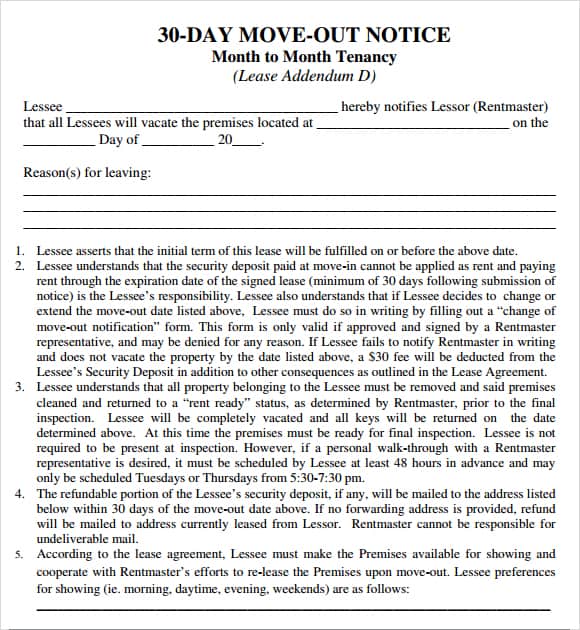
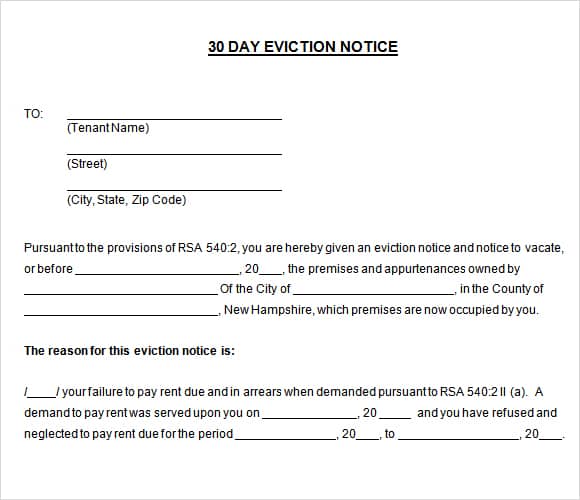

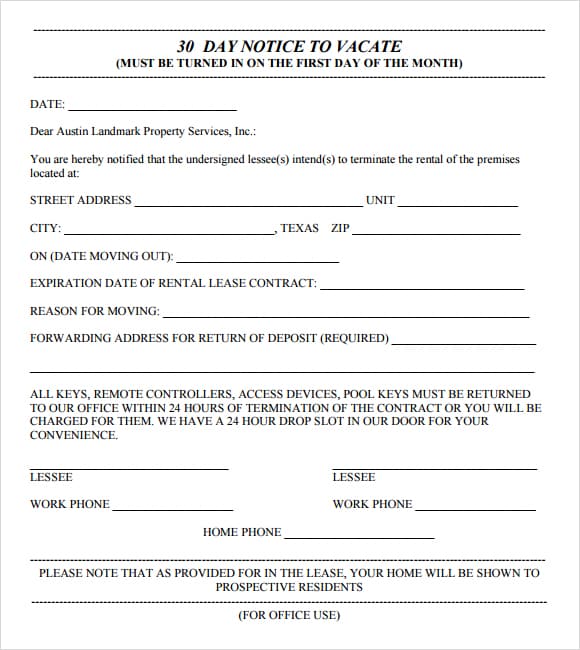
Notice of Termination of Tenancy Template:

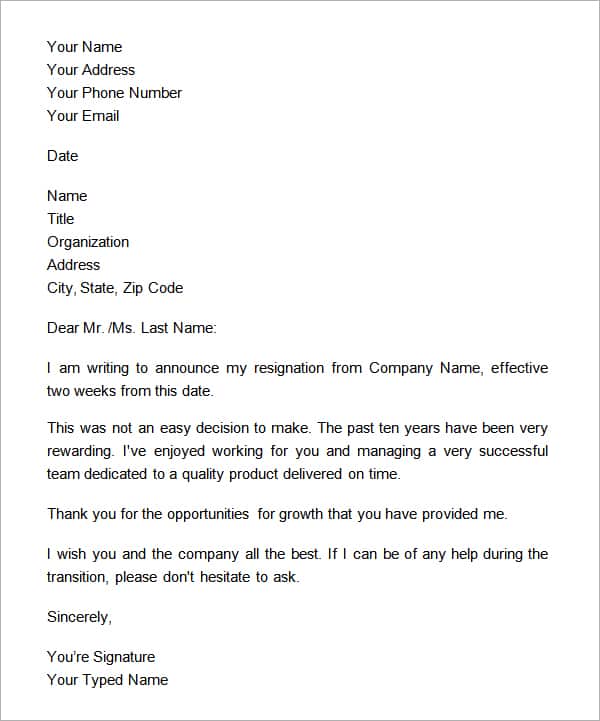
Two Weeks Notice Letters:


Eviction Notice Sample Templates:
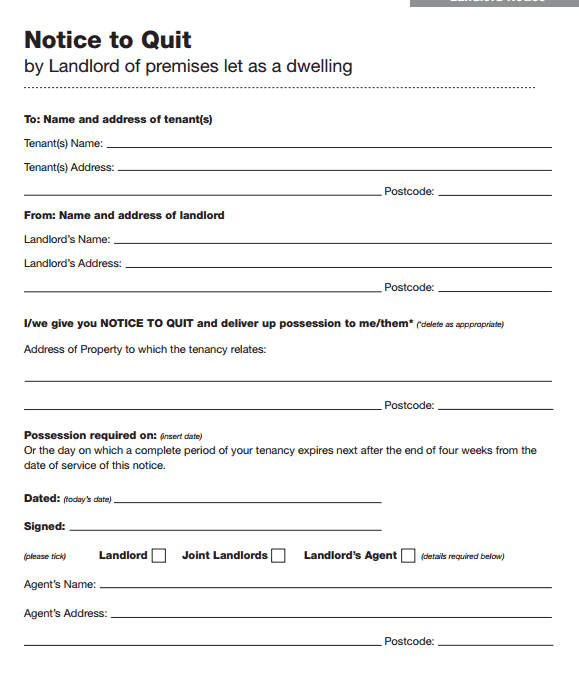
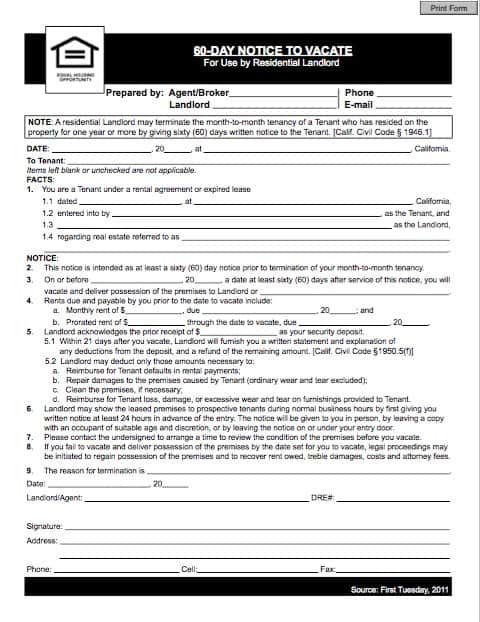
The DOC and DOCX files open in Microsoft Word, Google Docs and LibreOffice Writer. The PDF forms, including a landlord's notice to quit and a 60-day notice to vacate for residential landlords, are examples that can be printed and filled in by hand.
Important: eviction laws differ significantly between countries, states, provinces and cities. Notice periods, permitted reasons, required wording, service methods and court procedures vary, and some areas have additional tenant protections. These templates are general examples and not legal advice. Always check the current law where the property is located, use official forms where they are required and consult a lawyer, housing authority or tenant advice service if you are unsure. Never attempt to remove a tenant by changing locks, cutting utilities or removing belongings; self-help eviction is illegal in most places.
Understanding the different notices
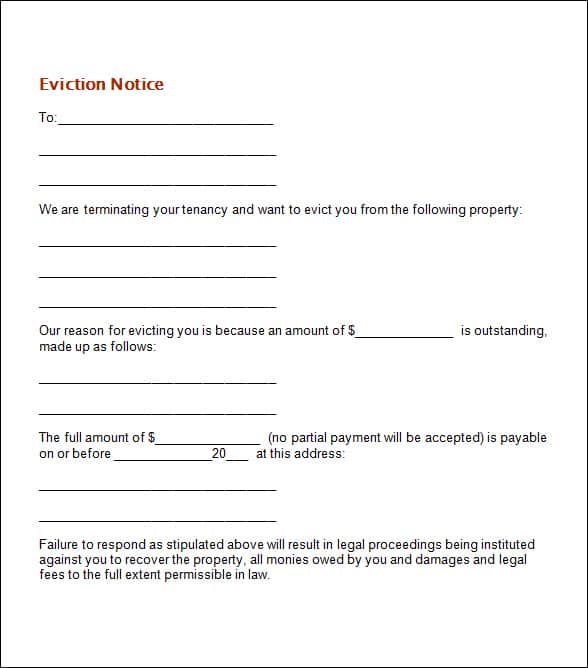
Eviction notice
A general notice informing a tenant that the landlord intends to end the tenancy and recover possession, usually stating the reason and the date by which the tenant must leave.
Notice to quit
A formal notice from a landlord to a tenant, or sometimes from a tenant to a landlord, ending a periodic tenancy. In some jurisdictions it is a required step before court action. The included PDF example shows a notice to quit for premises let as a dwelling.
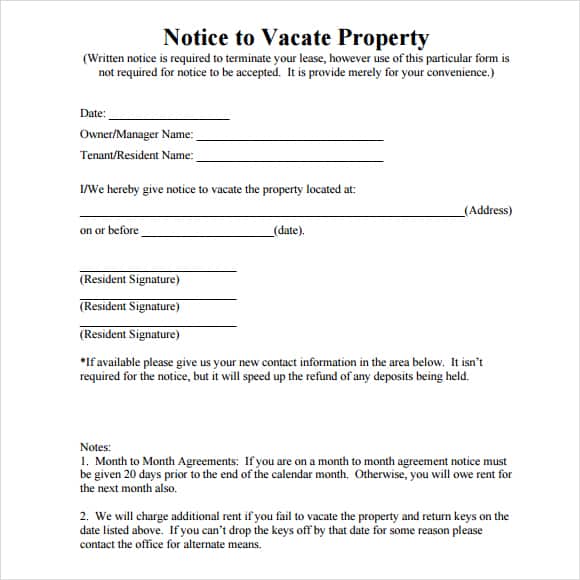
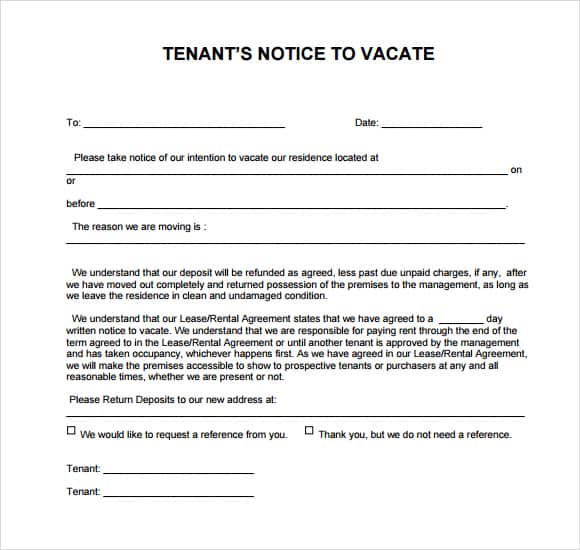
Notice to vacate
A notice stating the date by which the tenant must leave the property. Many jurisdictions specify 30, 60 or 90 days depending on the type of tenancy and how long the tenant has lived there. The included 60-day notice shows a format used by residential landlords for month-to-month tenancies.
Pay rent or quit notice
Used when rent is overdue, giving the tenant a short period to pay in full or leave.
Cure or quit notice
Used when the tenant has breached a lease term, such as unauthorized pets or occupants, giving a period to fix the breach.
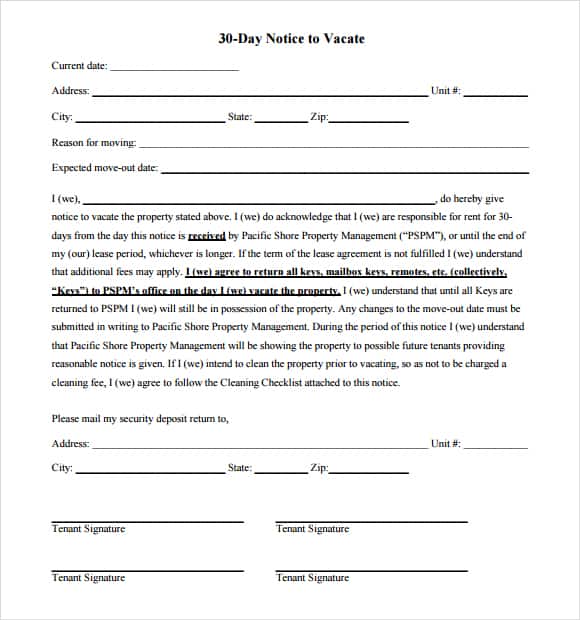
Notice of termination of tenancy
A notice ending a tenancy at the end of a fixed term or periodic term, often without the tenant being at fault.
About the two weeks' notice letters
This collection also includes three two weeks' notice letters. These are resignation letters that an employee sends to an employer, giving two weeks' notice before leaving a job; they are not tenancy documents. They are included as general notice letter examples. If you are resigning from a job, edit the employer, job title and final working day, and keep the tone positive and professional.
What to include in an eviction notice
- Date the notice is issued.
- Landlord's or agent's name and contact details.
- Tenant's full name, and all adult occupants if required.
- Full address of the rental property, including unit number.
- Type of notice and the legal basis or reason, such as unpaid rent or lease violation, where required.
- Amount of rent owed and the period it covers, for non-payment notices.
- Action required, such as pay, fix the breach or vacate.
- Deadline or date by which the tenant must comply or leave.
- The notice period, which must comply with local law.
- Statement of what will happen if the tenant does not comply, such as court proceedings.
- Any mandatory tenant information or prescribed wording.
- Landlord's signature and date.
- Proof of service details.
How to prepare and serve a notice step by step
- Review the lease and identify the reason for ending the tenancy.
- Check the law where the property is located, including required forms, notice periods and protected periods.
- Choose the correct type of notice.
- Fill in the template accurately, double-checking names, addresses, amounts and dates.
- Calculate the notice period correctly, counting days as required by local rules.
- Sign and date the notice.
- Serve the notice using an approved method, such as personal delivery, registered or certified mail or posting at the property, as permitted locally.
- Keep a copy of the notice and record how and when it was served, ideally with a witness or proof of delivery.
- Wait until the notice period ends before taking further steps.
- If the tenant does not comply, follow the legal court process; do not attempt to remove the tenant yourself.
Common reasons for ending a tenancy
- Non-payment of rent.
- Repeated late payment.
- Serious damage to the property.
- Illegal activity on the premises.
- Unauthorized occupants or subletting.
- Breach of lease terms, such as pets or noise.
- End of a fixed-term lease.
- Landlord wishes to sell, renovate or move into the property, where permitted.
Tips for landlords
- Communicate with tenants early; many problems can be solved before a formal notice.
- Keep detailed records of rent payments, communications and breaches.
- Use clear, factual, non-threatening language.
- Follow the exact legal procedure; mistakes can invalidate the notice and restart the timeline.
- Do not accept partial rent after serving a notice without checking how this affects your rights.
- Respect the tenant's privacy and right to quiet enjoyment during the notice period.
- Consider mediation or payment plans as alternatives to eviction.
- Seek professional advice for contested or complex cases.
Tips for tenants receiving a notice
- Read the notice carefully and note the deadline.
- Check whether the notice period and reason comply with local law.
- Contact the landlord to discuss the issue, especially for rent arrears.
- Seek advice from a tenant union, legal aid service or housing authority.
- Keep copies of your lease, rent receipts and communications.
- Do not ignore court papers if proceedings begin.
Keeping records during the notice period
Good records protect both landlords and tenants if a dispute reaches court. Landlords should keep a copy of the notice, proof of service, the lease, rent ledger and rent receipts, inspection reports and all written communications. Tenants should keep their copy of the notice, receipts for rent paid and any messages with the landlord. Dates matter: record when the notice was delivered, when the notice period ends and any agreements reached in the meantime.
Alternatives to eviction
Eviction is costly and time-consuming for everyone. Before serving a notice, consider whether a payment plan, a formal warning letter, mediation or a mutually agreed move-out date with a cash-for-keys arrangement could resolve the situation more quickly. Many disputes, particularly over rent arrears caused by temporary hardship, can be resolved with clear communication and a written agreement.
Calculating the notice period correctly
Errors in calculating the notice period are one of the most common reasons notices are rejected. Check whether your jurisdiction counts calendar days or business days, whether the day of service is included and whether extra days are added when the notice is sent by mail. Some notices must expire on the last day of a rental period rather than on any date. Write the exact date by which the tenant must comply rather than only a number of days, and allow a little extra time to be safe.
Serving notices on multiple tenants
Where several adults are named on the lease, many jurisdictions require the notice to be addressed to all of them. Include every tenant's name on the notice and serve it in a way that reaches all occupants, such as separate copies or delivery to the property addressed to each tenant. Record the method and time of service for each person.
Frequently asked questions
Are these eviction notice templates free?
Yes. All templates are free to download and edit.
Is a notice from this page legally valid?
It depends on your location. Many jurisdictions require specific forms or wording. Use these templates as a starting point and confirm local requirements.
How much notice must a landlord give?
It varies widely, from a few days for non-payment in some areas to several months for no-fault terminations in others. Check local law.
Can I email an eviction notice?
Only if local law or the lease permits electronic service. Many jurisdictions require personal delivery or mail.
What should I do if the tenant leaves before the deadline?
Inspect the property, document its condition with photos, collect keys and handle the deposit according to the lease and local law. Confirm the end of the tenancy in writing.