
Every time a tenant pays rent, both sides benefit from a clear written record. A rent receipt confirms that the landlord received a payment, shows the amount, the property and the period covered, and protects everyone if questions arise later. Landlords use rent receipts to keep accurate accounts and prove income, while tenants use them as proof of payment, for tax purposes, for allowance claims and when applying for future rentals. For cash payments in particular, a signed receipt is essential.
This page offers six free rent receipt templates in Word and Excel formats, ranging from simple single receipts to receipt book layouts with several receipts per page. Preview the designs, download the template that suits you and follow our guide to filling in a complete and professional rent receipt.
Download free rent receipt templates
Examples of Rent Receipt Templates:
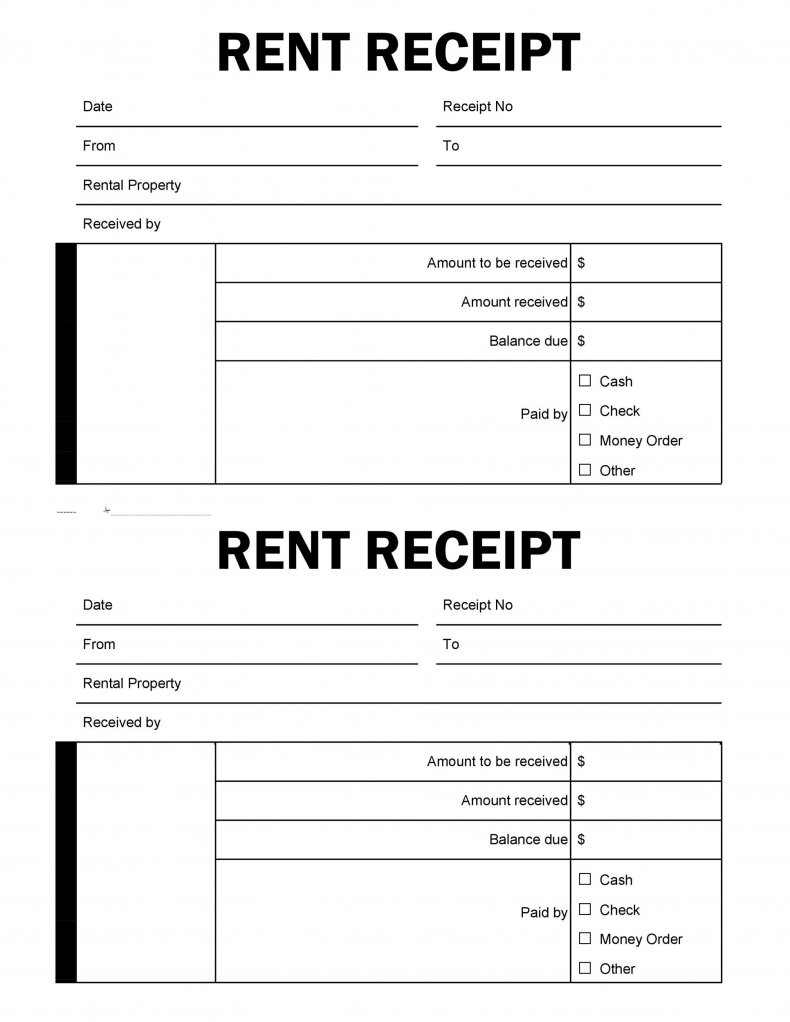

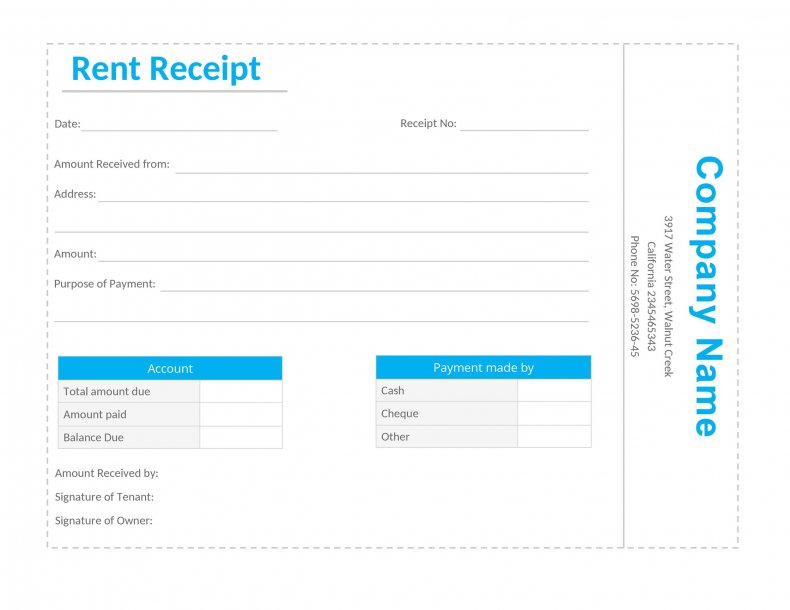
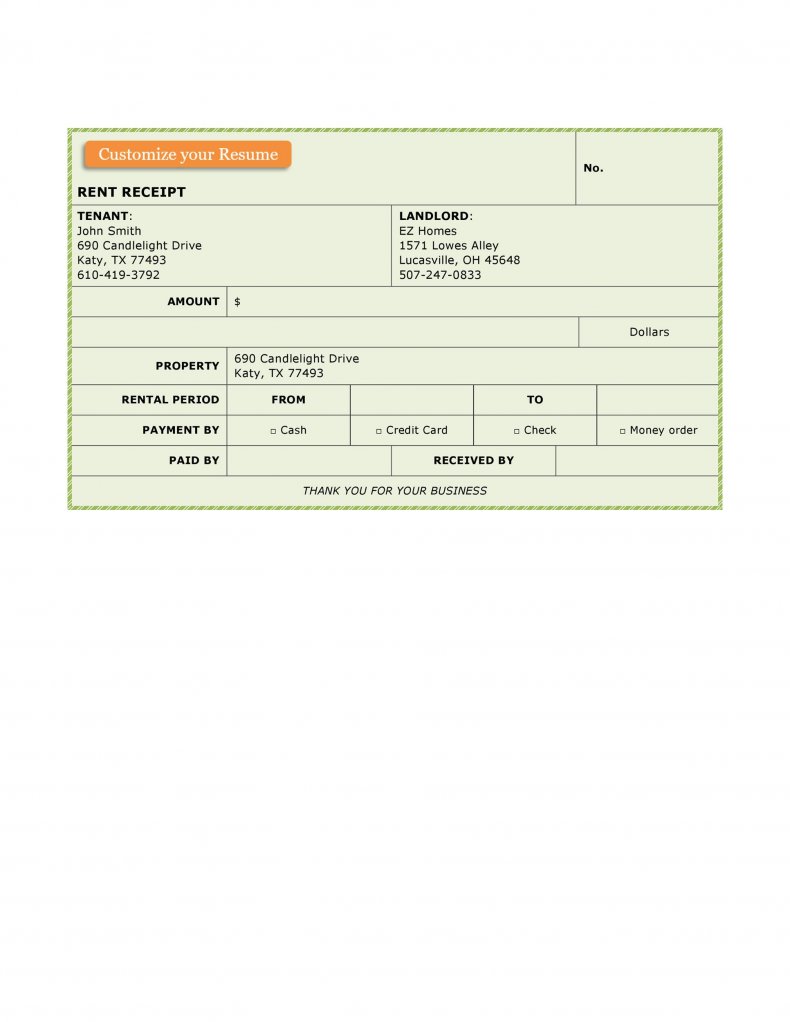
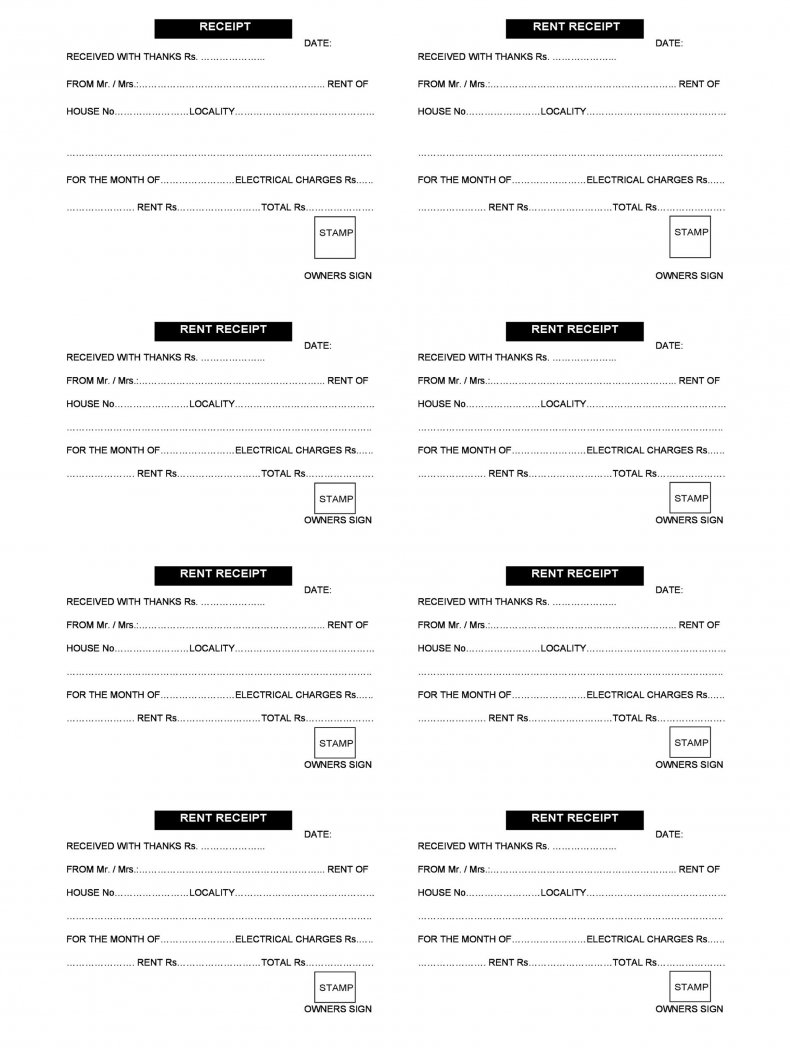
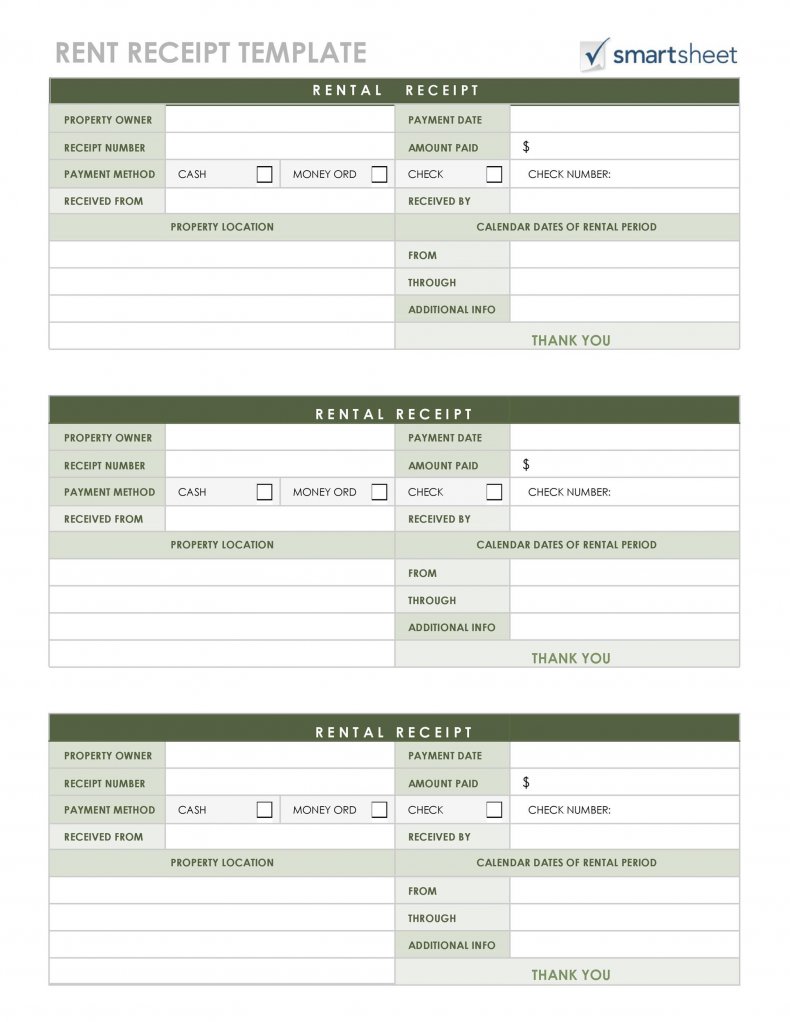
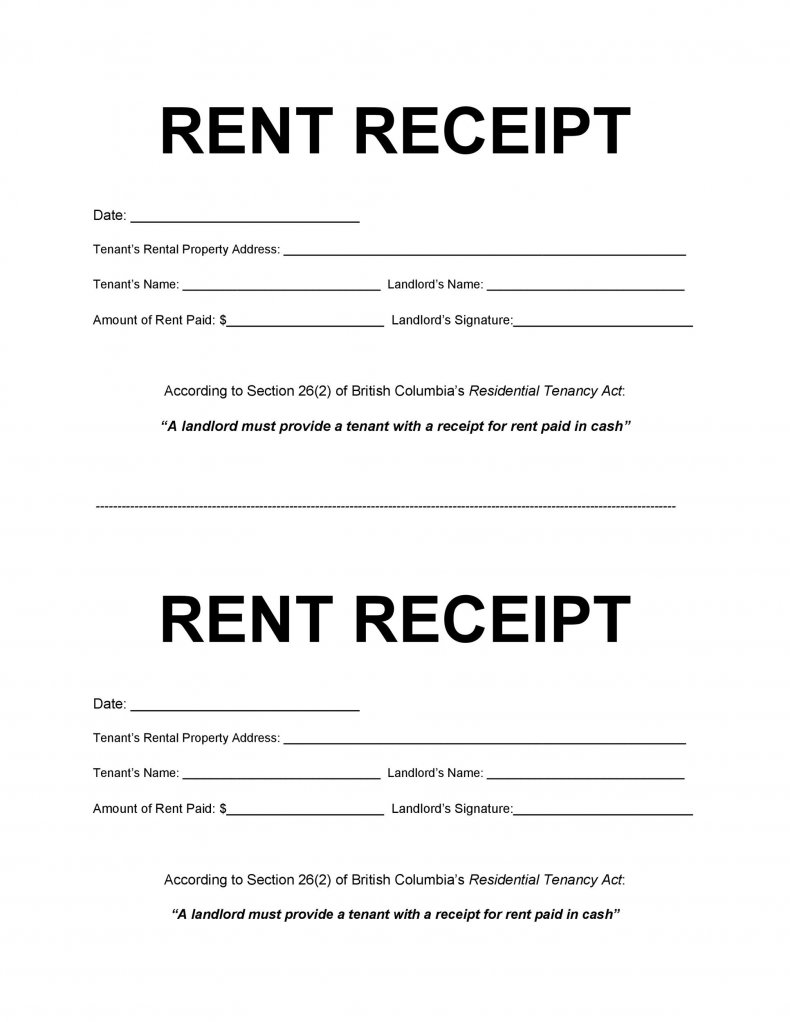
The DOC and DOCX templates open in Microsoft Word, Google Docs and LibreOffice Writer. The XLS template opens in Microsoft Excel, LibreOffice Calc and Google Sheets, which is handy if you prefer to keep receipts and totals in a spreadsheet.
What is a rent receipt?
A rent receipt is a document issued by a landlord or property manager to a tenant as proof that rent has been paid. It records who paid, who received the payment, how much was paid, for which property, for which rental period and by what method. Rent receipts are important for all payment methods, but they are especially important for cash payments, which otherwise leave no paper trail. In many places, landlords are legally required to provide a receipt when rent is paid in cash or when the tenant requests one.
What to include on a rent receipt
- Receipt number for easy reference and record keeping.
- Date the payment was received.
- Tenant's full name.
- Landlord's or property manager's name and contact details.
- Rental property address, including unit or flat number.
- Rental period covered, for example 1 to 30 November 2026.
- Amount paid, in figures and words.
- Payment method: cash, cheque, bank transfer, card or mobile payment.
- Cheque or transaction reference number if applicable.
- Balance due or confirmation of full payment.
- Any late fees, deposits or other charges included.
- Landlord's or agent's signature.
Payment date vs. rental period
One of the most common mistakes on rent receipts is confusing the date of payment with the period the rent covers. A tenant might pay on 28 October for the month of November, or pay late on 10 November for the same month. Recording both dates clearly prevents disputes about whether rent was paid on time and which months are covered. Our templates include separate fields so this information is always clear.
How to fill in a rent receipt step by step
- Choose a template and save a copy for the tenant or the month.
- Enter a unique receipt number, numbering receipts in sequence.
- Write the date the payment was received.
- Enter the tenant's name and the property address.
- Record the rental period covered by the payment.
- Write the amount received in figures and in words.
- Tick or write the payment method and add any reference number.
- Note any balance outstanding or write "Paid in full".
- Sign the receipt and add your name and title.
- Give the original to the tenant and keep a copy for your records.
Why landlords should issue rent receipts
- Provide proof of income for tax returns and accounting.
- Create an accurate payment history for each tenant.
- Resolve disputes quickly with documented evidence.
- Support legal proceedings if eviction or debt recovery becomes necessary.
- Demonstrate professionalism and build trust with tenants.
- Comply with local laws that require receipts for cash payments.
- Track partial payments, late fees and deposits clearly.
Why tenants need rent receipts
- Proof of payment if the landlord claims rent was not paid.
- Evidence for tax deductions or credits where rent qualifies.
- Support for house rent allowance or employer reimbursement claims.
- Rental history for future tenancy applications.
- Records for government assistance or housing benefit applications.
- Peace of mind when paying in cash.
Rent receipts for tax and allowances
In some countries, tenants can claim tax relief, credits or allowances based on rent paid. For example, salaried employees in some regions claim house rent allowance exemptions by submitting rent receipts to their employer. Requirements vary, but receipts often need to include the landlord's name, property address, rental period, amount and the landlord's signature, and sometimes the landlord's tax identification number above certain thresholds. Check local rules and keep copies of all receipts for the full tax year. Landlords also need accurate records to report rental income correctly.
Using the Excel rent receipt template
The Excel rent receipt template is ideal for landlords who manage several tenants or properties. You can create one receipt per sheet or keep a running log with a row for each payment, then print individual receipts as needed. Use formulas to total rent received per month or year and to calculate any balance due. Keeping digital records makes it easy to search past payments and share statements with an accountant.
Best practices for rent record keeping
- Issue a receipt for every payment, no matter how small.
- Number receipts in sequence and never reuse numbers.
- Keep copies for at least as long as local tax rules require, often five to seven years.
- Store digital copies in a secure, backed-up folder.
- Record partial payments and outstanding balances clearly.
- Reconcile receipts with bank statements monthly.
- Use a separate receipt for security deposits and note whether they are refundable.
- Keep a rent ledger or spreadsheet summarizing all payments per tenant.
Digital and electronic rent receipts
Many landlords now email receipts as PDFs or send them through property management software. Electronic receipts are convenient, easy to store and can be sent instantly after a bank transfer. To create one, fill in a template in Word or Excel, save it as a PDF and email it to the tenant. Include an electronic signature or typed name, and keep a copy in a dedicated folder for each property. Make sure the tenant agrees to receive receipts electronically if local rules require consent.
Handling partial and late payments
When a tenant pays only part of the rent, issue a receipt for the exact amount received and clearly show the remaining balance and the date it is due. Avoid writing "Paid in full" until the entire amount has been received. If a late fee applies under the tenancy agreement, list it as a separate line so the tenant can see how the total was calculated. In some jurisdictions, accepting a partial payment can affect a landlord's right to begin eviction proceedings, so check local law and consider adding a note such as "Partial payment accepted without waiver of rights" where appropriate. Clear records of partial and late payments make any later conversation or dispute far easier to resolve.
Rent receipt vs. rent invoice vs. rent ledger
A rent invoice or rent demand is sent before payment to request rent that is due. A rent receipt is issued after payment to confirm the money was received. A rent ledger is a running record of all charges and payments for a tenant over time, showing the balance after each transaction. Together these documents give landlords and tenants a complete picture of the tenancy's finances. Use the receipts on this page for individual payments and the Excel template or our general ledger templates to keep a full payment history.
Rent receipt wording example
"Received from [Tenant Name] the sum of [Amount in words] ([Amount in figures]) by [payment method] as rent for the property at [Address] for the period [Start date] to [End date]. Payment received on [Date]. Balance due: [Amount or Nil]. Signed: [Landlord Name], Landlord." This simple wording covers all essential information and can be adapted for weekly, monthly or quarterly rent payments.
Frequently asked questions
Are these rent receipt templates free?
Yes. All six templates are free to download, edit and print for personal or business use.
Is a rent receipt legally required?
It depends on your location. Many jurisdictions require landlords to provide receipts for cash payments or on request. Even where not required, receipts are strongly recommended.
Can a tenant create a rent receipt?
A tenant can prepare the receipt, but it should be signed by the landlord or agent to serve as proof of payment.
Do I need a revenue stamp on a rent receipt?
In some countries, receipts above a certain amount require a revenue stamp. Check your local regulations.
How long should I keep rent receipts?
Keep rent receipts for at least the full tenancy plus the period required by local tax rules, often five to seven years. Landlords should store copies with their rental income records, and tenants should keep them until any deposit is returned and tax claims are settled.