Growth rarely happens by accident. Whether you want a promotion, a career change, new skills or more confidence, the people who make the most progress are usually the ones who write down their goals and plan how to reach them. A personal development plan turns vague intentions into clear, achievable steps. Our free personal development plan template for Microsoft Word walks you through a proven structure: a long-term vision, an honest self-assessment, SMART goals with actions and resources, and regular progress reviews.
Preview the template below, download the editable DOCX file, and follow our guide to creating a development plan you will actually stick to.
Download the free personal development plan template
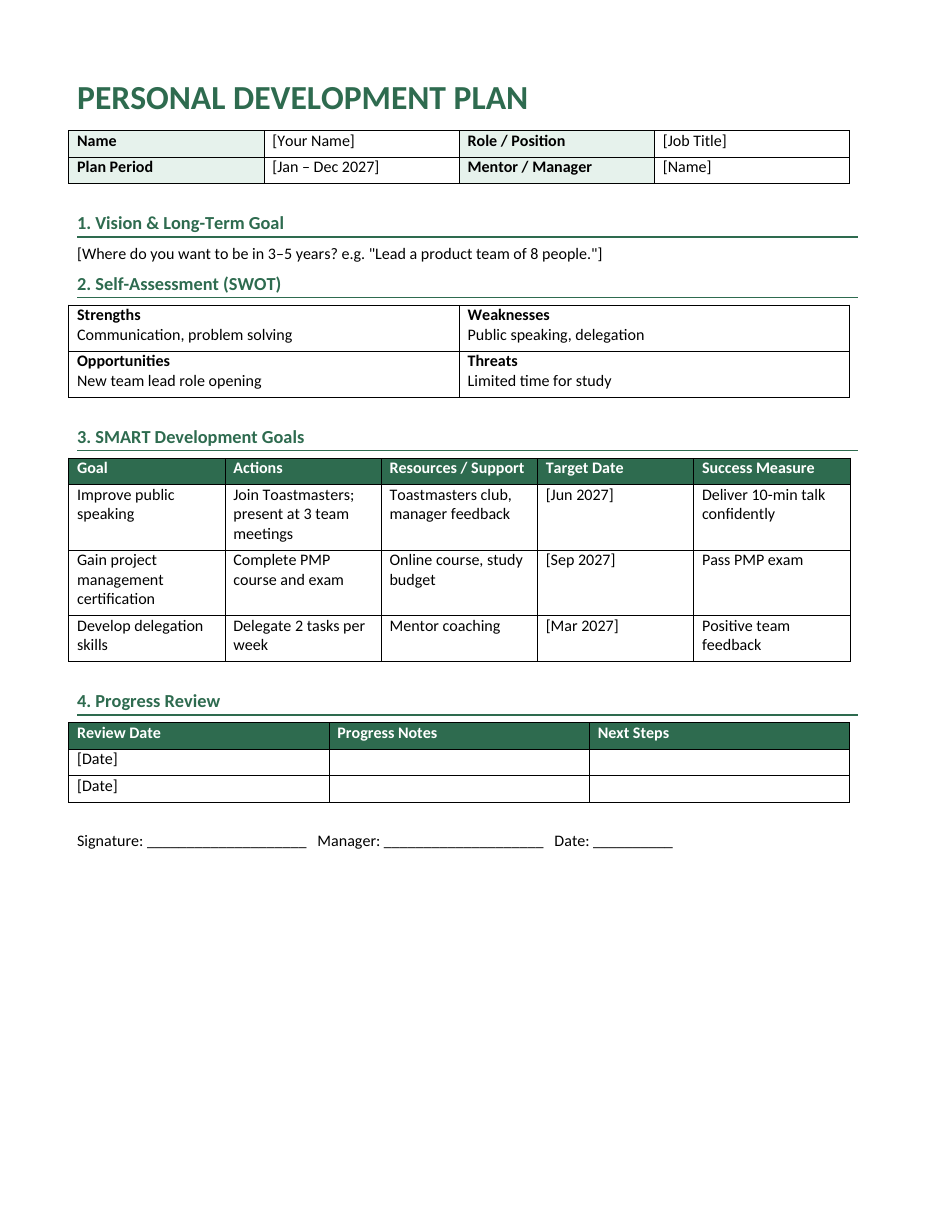
The template opens in Microsoft Word, Google Docs, LibreOffice Writer and Pages. It includes worked examples so you can see how to complete each section.
What is a personal development plan?
A personal development plan (PDP), also called an individual development plan (IDP) or professional development plan, is a written action plan for improving your skills, knowledge, career prospects or personal life. It describes where you are now, where you want to be and the specific steps you will take to get there. Employees use PDPs in performance reviews and career conversations, students use them for academic and career planning, and individuals use them for self-improvement goals such as health, confidence or financial skills.
What this PDP template includes
- Personal details – name, role, plan period and mentor or manager.
- Vision and long-term goal – where you want to be in three to five years.
- Self-assessment (SWOT) – your strengths, weaknesses, opportunities and threats.
- SMART development goals – a table with each goal, the actions you will take, resources and support, target date and success measure.
- Progress review – dated notes on progress and next steps.
- Signatures – for you and your manager or mentor.
How to write a personal development plan step by step
- Define your vision. Imagine your ideal career or life in three to five years. Write it in one or two sentences, such as "Lead a product team of eight people".
- Assess yourself honestly. Complete the SWOT analysis using feedback from colleagues, performance reviews or personality and skills assessments.
- Identify the gaps between where you are and where you want to be.
- Choose three to five priority goals. Too many goals spread your energy thin.
- Make each goal SMART: specific, measurable, achievable, relevant and time-bound.
- List concrete actions for each goal, such as courses, projects, reading, coaching or practice.
- Identify resources and support, including budget, time, mentors and tools.
- Set target dates and define how you will measure success.
- Share the plan with your manager or mentor and agree on regular check-ins.
- Review progress monthly or quarterly and update the plan as your circumstances change.
Writing SMART goals
SMART goals turn wishes into plans. Compare "get better at public speaking" with "deliver a confident ten-minute presentation at the June team meeting after joining Toastmasters and practising at three smaller meetings". The second goal is specific about what success looks like, measurable, realistic, relevant to a leadership career and tied to a deadline. Each row of the template's goal table follows this structure.
SMART goal examples
- "Complete the PMP certification course and pass the exam by September 2027."
- "Read one leadership book per month and share key takeaways with my team."
- "Improve Excel skills by completing an advanced course and building three reporting dashboards by March."
- "Delegate at least two tasks per week to develop team members and free up time for strategic work."
- "Run a 10K race by October by following a 12-week training plan."
Using SWOT for self-assessment
- Strengths: skills, qualities and achievements that set you apart, such as communication, technical expertise or reliability.
- Weaknesses: areas where you lack skills or confidence, such as public speaking, time management or delegation.
- Opportunities: external factors you can use, such as a new role opening, a training budget, a mentor or industry growth.
- Threats: obstacles that could hold you back, such as limited time, changing technology or competition for promotions.
Use strengths to pursue opportunities, and create goals that address weaknesses and reduce threats.
Personal development plan examples
For employees
An employee aiming for a team lead role might set goals around leadership training, delegation, stakeholder communication and a project management qualification, with their manager as a sponsor.
For students
A university student might plan internships, networking, a portfolio of projects and specific grades, with a careers adviser as mentor.
For career changers
Someone moving into data analysis might plan online courses, a certification, portfolio projects, informational interviews and a timeline for applying to junior roles.
For personal growth
Personal goals might include building confidence, improving health, learning a language or managing money, each with clear actions and milestones.
Tips for sticking to your development plan
- Keep the plan visible, for example printed on your desk or pinned in your notes app.
- Block time in your calendar for learning activities.
- Break large goals into monthly milestones.
- Find an accountability partner or mentor.
- Track progress in the review table and celebrate small wins.
- Ask for feedback regularly.
- Adjust goals when circumstances change rather than abandoning the plan.
- Reflect on what you learned, not just what you completed.
PDPs in the workplace
Many organizations use personal development plans as part of performance management and succession planning. For managers, PDPs help identify training needs, prepare employees for promotion and improve engagement and retention. When completing a PDP with your manager, connect your goals to the team's objectives, agree on support such as training budget or stretch assignments, and schedule quarterly reviews. Keep a record of completed goals; it provides strong evidence in performance reviews and salary discussions.
Common personal development plan mistakes
- Setting too many goals at once, which spreads time and energy too thin.
- Writing vague goals such as "be more productive" with no measure of success.
- Focusing only on weaknesses and ignoring strengths you could build on.
- Listing actions without resources, time or support to complete them.
- Treating the PDP as a one-time exercise rather than a living document.
- Not sharing the plan with a manager, mentor or accountability partner.
- Giving up after one missed deadline instead of adjusting the plan.
Skills to consider for your development plan
If you are unsure where to focus, consider the skills that employers value most and that support long-term career growth. Communication skills include presenting, writing, active listening and negotiation. Leadership skills include delegation, coaching, decision making and conflict resolution. Digital skills range from advanced Excel and data analysis to project management software, AI tools and basic coding. Personal effectiveness skills include time management, prioritization, resilience and emotional intelligence. Technical or industry skills depend on your field and may require formal certifications. Choose a mix of skills that close your biggest gaps and move you towards your long-term vision, and use the SWOT section of the template to decide which ones matter most right now.
Measuring progress
Success measures make it clear when a goal has been achieved. Use objective evidence wherever possible: a certificate, a completed project, a target reached, positive feedback from a manager or a measurable improvement such as faster report preparation. Record each milestone in the progress review table with the date, what you achieved and what you will do next.
Getting support from your manager or mentor
A development plan is far more effective when someone else is invested in your progress. Book a dedicated conversation with your manager or mentor, share your draft plan in advance and explain how your goals support the team's objectives. Ask for specific support, such as a training budget, time for study, a stretch project or introductions to people in your network. Agree how often you will review progress, and add those dates to the review table. Regular, honest feedback from someone who sees your work helps you adjust your plan and keeps you motivated.
Frequently asked questions
Is this personal development plan template free?
Yes. Download, edit and use it for personal, academic or workplace development.
How many goals should a PDP include?
Three to five goals is ideal. Focus on the goals that will make the biggest difference.
How often should I review my development plan?
Review progress at least quarterly, with a full update once a year.
Can I use this template for employee development plans?
Yes. Managers can use it with each team member and store completed plans with performance review records.
What is the difference between a PDP and a career plan?
A career plan focuses on job roles and career moves over many years. A personal development plan focuses on the specific skills, knowledge and behaviours you will build in the next six to twelve months to support those career moves.
Can students use this template?
Yes. Students can use the same structure to plan grades, extracurricular activities, internships and skills, with a teacher, tutor or careers adviser as their mentor.
Related templates
Turn goals into action with our action plan templates, weekly planner templates, daily schedule template and to-do list templates.