
When something goes wrong at work, at school or at an event, an accurate written record is essential. An incident report documents what happened, who was involved, any injuries or damage and the actions taken in response. It protects employees and organizations, supports insurance and legal claims, helps meet health and safety obligations and, most importantly, helps prevent the same incident from happening again.
This page provides ten free incident report templates in Word format, including employee incident reports, accident reports, company incident forms, standard and blank incident report formats and a welfare incident report. Preview each form, download the one that suits your workplace and follow our guide to writing a clear, factual incident report.
Download free incident report templates
More Samples of Incident Report
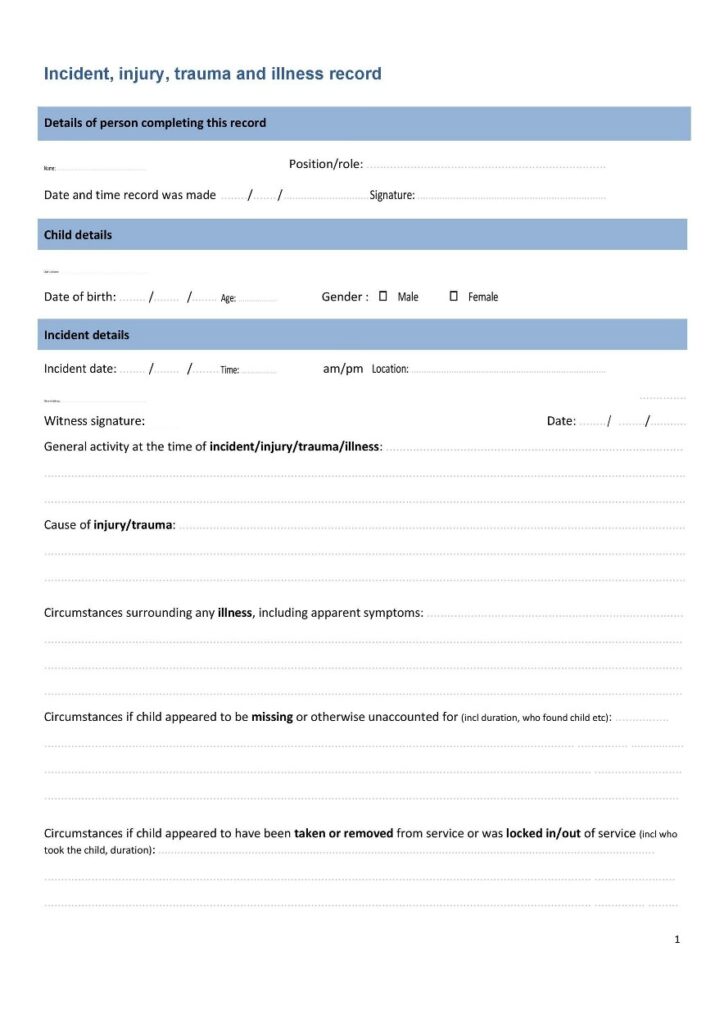

Incident Report Example
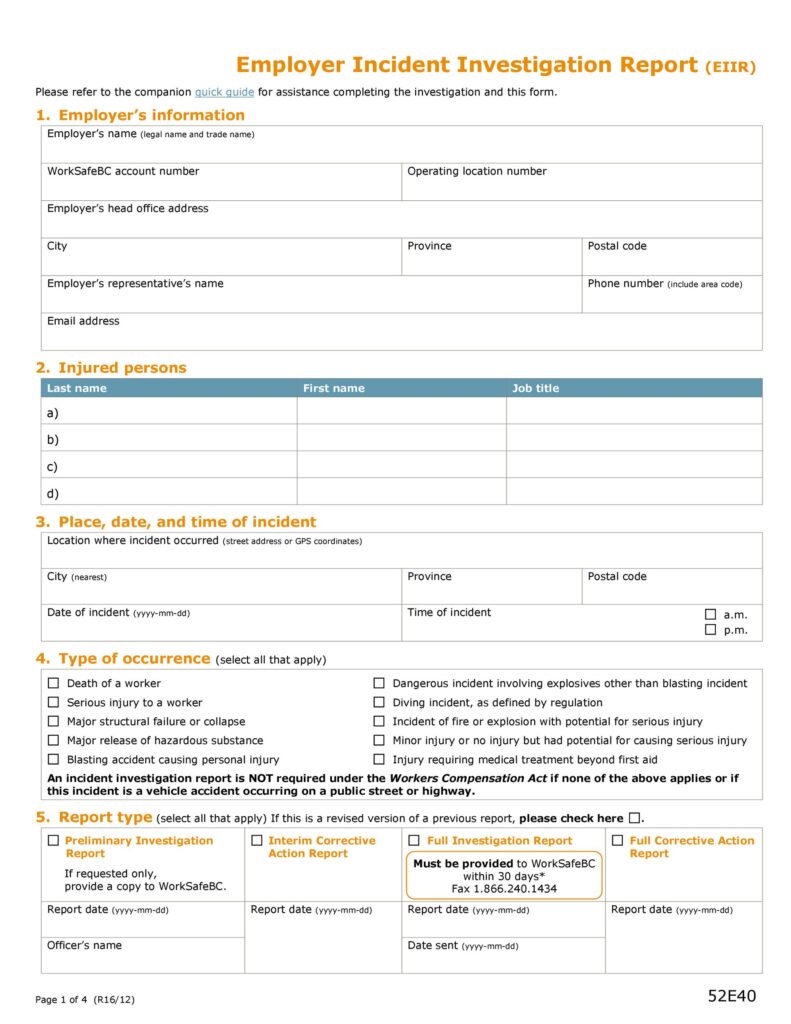
Employee Incident Report
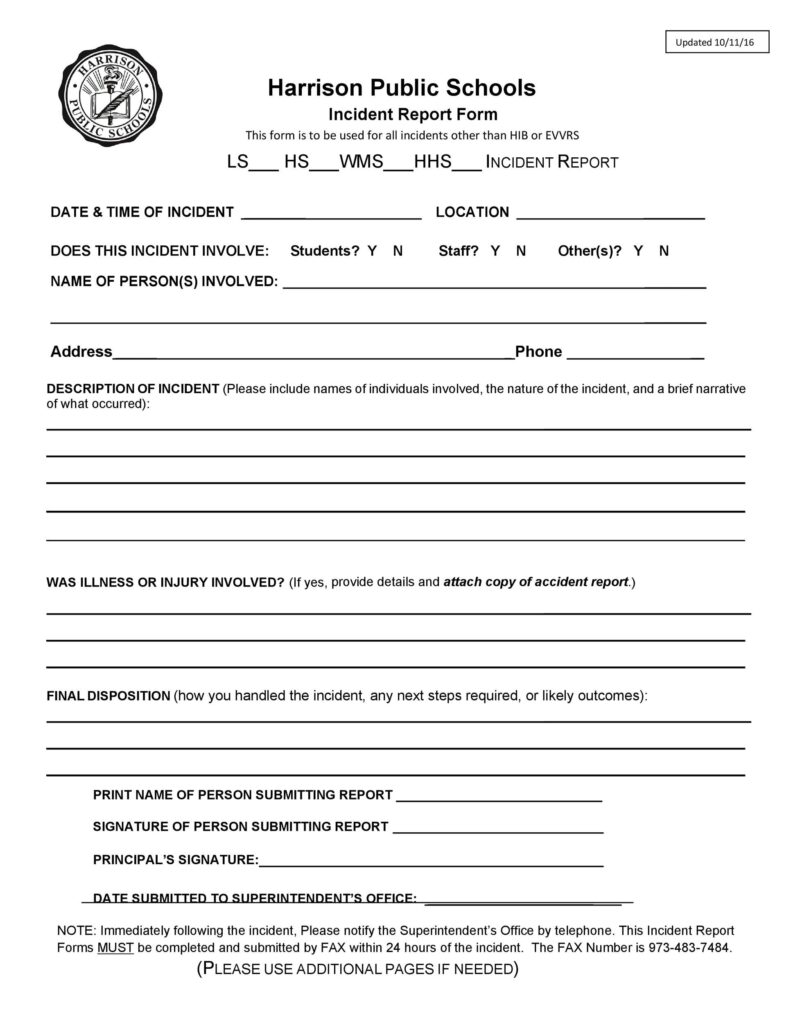
Incident Report Form Sample
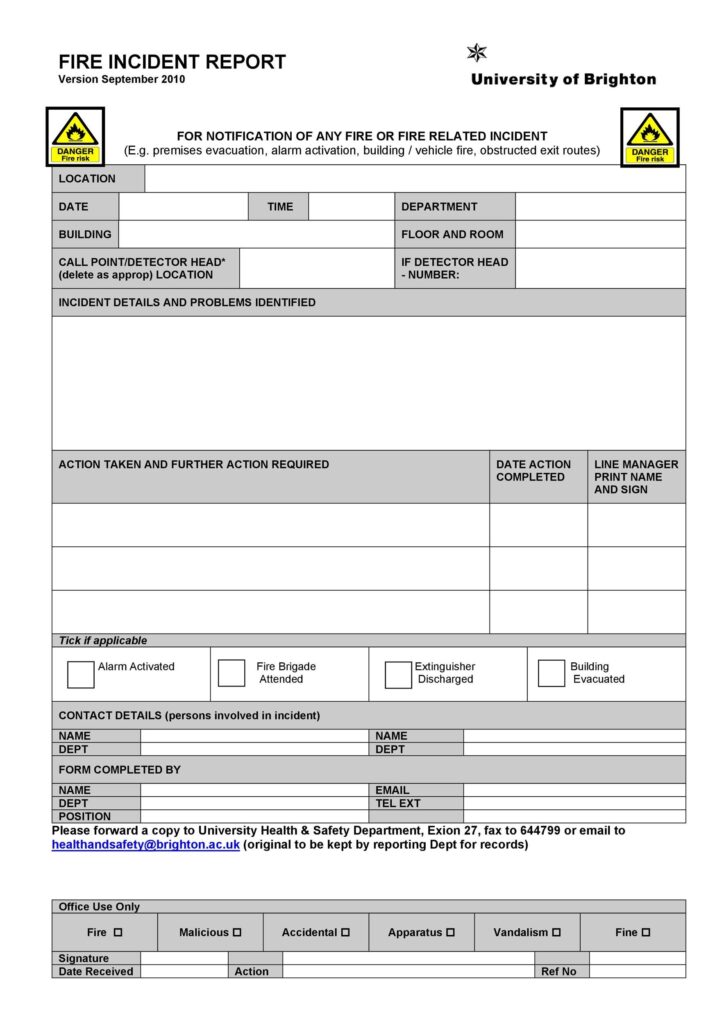
Blank Incident Report
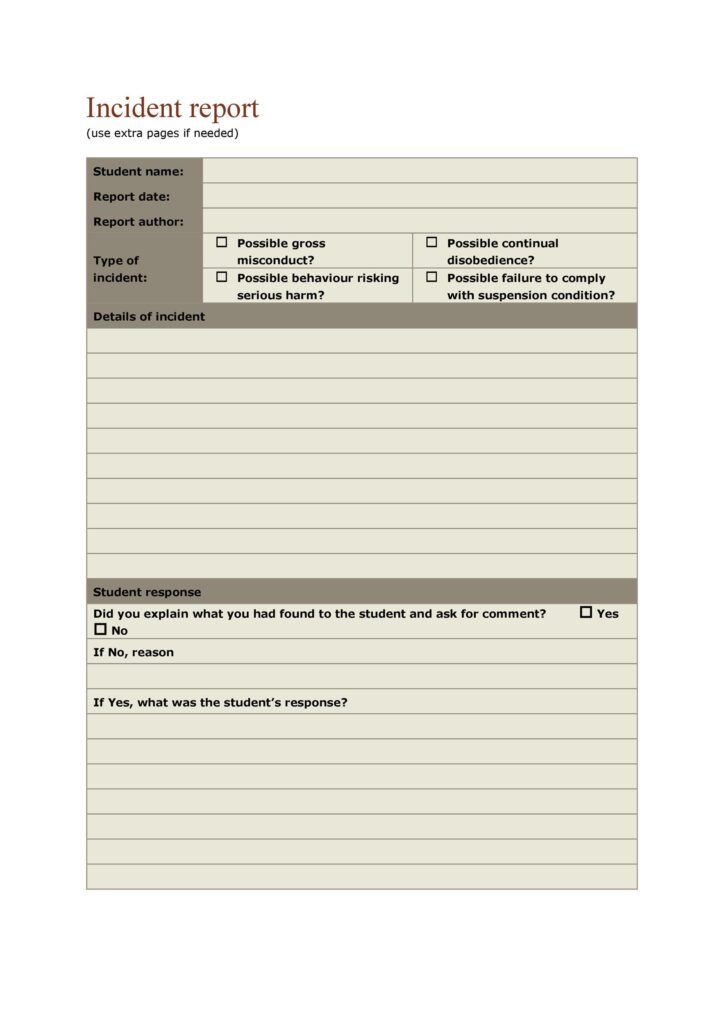
Company Incident Report
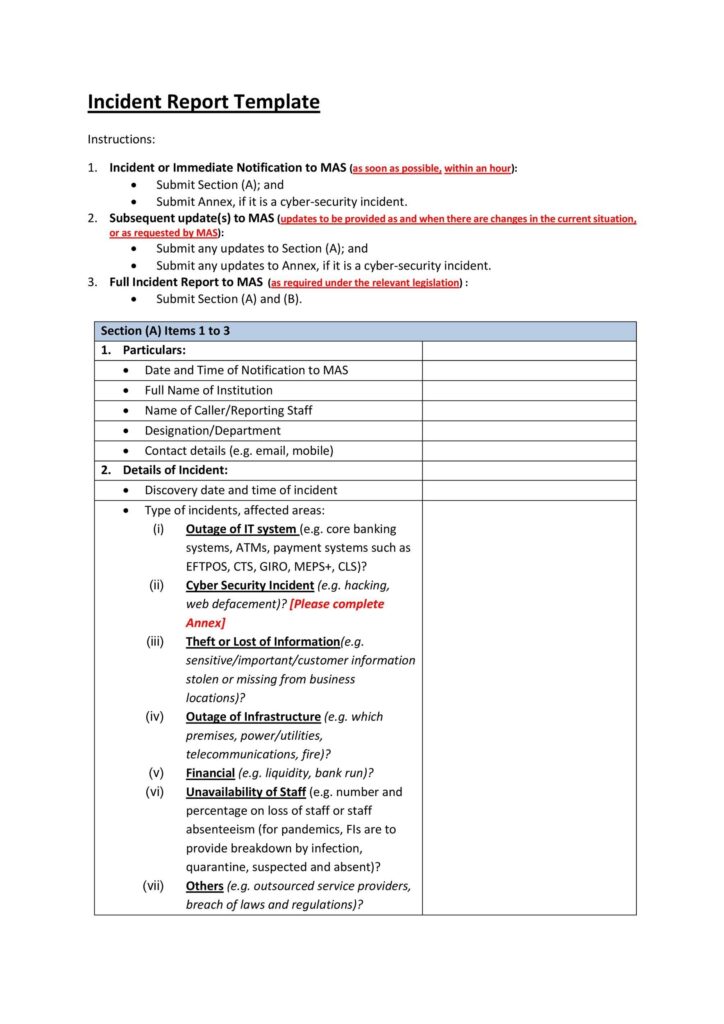
Accident Incident Report
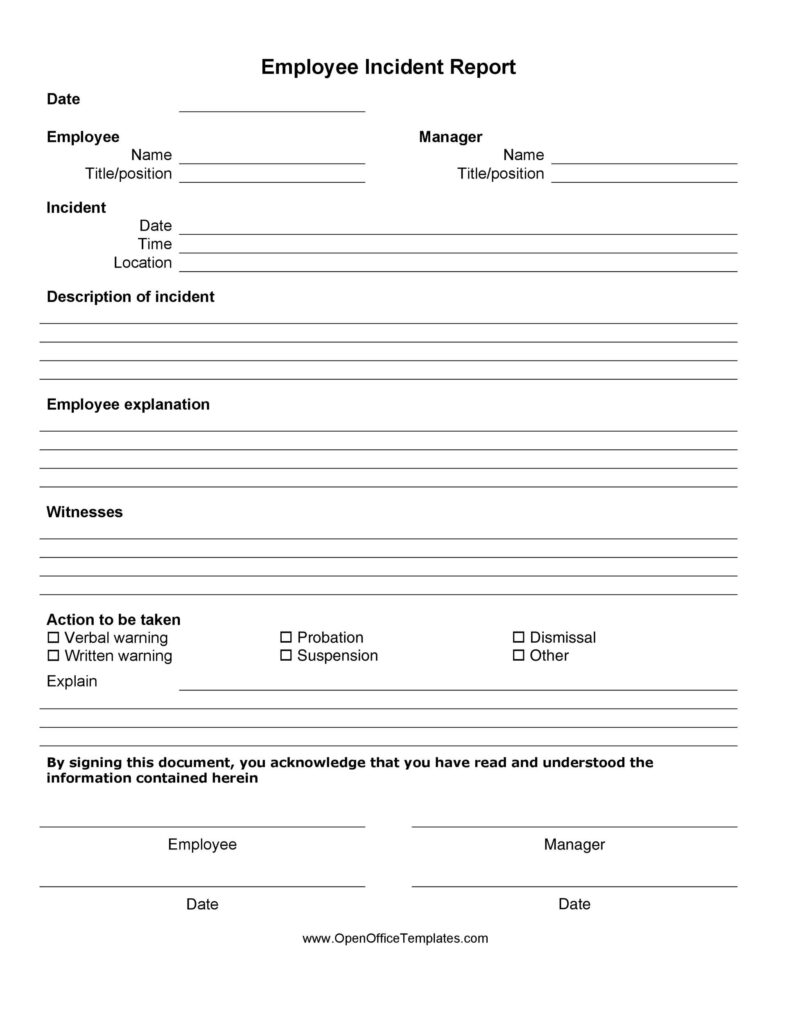
Standard Incident Report

Incident Report Format
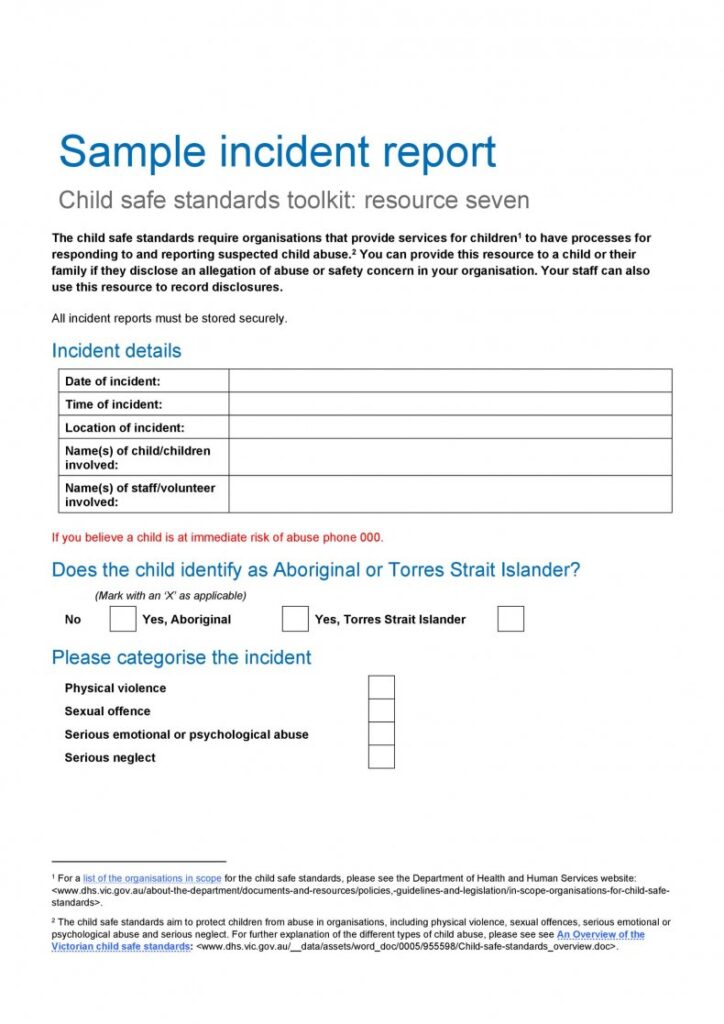
Welfare Incident Report
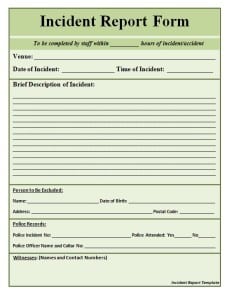
The DOCX and DOC files open in Microsoft Word, Google Docs and LibreOffice Writer. The ZIP download contains an additional editable incident report template in DOCX format.
What is an incident report?
An incident report is a formal document that records the details of an unexpected event that caused, or could have caused, injury, illness, damage, loss or disruption. Incidents include workplace accidents, near misses, security breaches, property damage, customer complaints, aggressive behaviour, safeguarding concerns and environmental spills. The report captures objective facts while they are fresh, creating a reliable record for investigation, follow-up and compliance.
Types of incident reports
Workplace accident report
Records injuries or illnesses suffered by employees at work, including first aid given and time off required.
Near miss report
Documents events that could have caused harm but did not, such as a falling object that narrowly missed someone. Near miss reporting is one of the best ways to prevent future accidents.
Employee incident report
Records workplace conduct issues, conflicts, policy breaches or other events involving staff.
Security incident report
Covers theft, break-ins, unauthorized access, vandalism or data security breaches.
Property damage report
Documents damage to buildings, vehicles, equipment or stock.
Customer or visitor incident report
Records injuries or incidents involving members of the public on your premises.
Welfare or safeguarding incident report
Used by schools, care providers and charities to record concerns about the wellbeing or safety of children or vulnerable adults.
What to include in an incident report
- Date, time and exact location of the incident.
- Name, role and contact details of the person reporting.
- Names of people involved, including employees, visitors or customers.
- Type of incident: injury, near miss, damage, security, behaviour or other.
- A factual, chronological description of what happened.
- Injuries sustained, body parts affected and treatment given.
- Property or equipment damaged.
- Names and statements of witnesses.
- Immediate actions taken, such as first aid, calling emergency services or isolating equipment.
- Contributing factors or suspected causes.
- Recommended corrective and preventive actions.
- Photographs, diagrams or other evidence attached.
- Signatures of the reporter and supervisor, with dates.
How to write an incident report step by step
- Make sure everyone is safe and that urgent medical help or emergency services have been called.
- Complete the report as soon as possible, ideally on the same day.
- Fill in the basic details: date, time, location and people involved.
- Describe what happened in chronological order, using clear, factual language.
- Record exactly what you saw and heard; avoid guessing, opinions or blame.
- Note injuries, damage and the immediate response.
- Collect witness names and statements, in their own words.
- Take photographs of the scene, hazards or damage if safe to do so.
- Identify possible causes and suggest actions to prevent recurrence.
- Sign the report and pass it to your supervisor, safety officer or HR team.
- Keep a copy according to your organization's record-keeping policy.
Incident report writing tips
- Stick to facts: "the floor was wet near the entrance" rather than "someone carelessly left water".
- Use the active voice and short sentences.
- Write times precisely, such as 14:35 rather than "afternoon".
- Use direct quotes from witnesses where useful.
- Avoid jargon and abbreviations others may not understand.
- Do not leave fields blank; write "not applicable" or "unknown" if necessary.
- Report near misses as well as actual incidents.
- Keep personal and medical information confidential.
Example incident description
"At approximately 10:15 on 4 November 2026, warehouse operative J. Ahmed slipped on a patch of hydraulic fluid in aisle 6 while carrying a box. He fell onto his left side and reported pain in his left wrist. Supervisor M. Ruiz arrived at 10:17, administered first aid and applied an ice pack. The area was cordoned off at 10:20 and the leak was traced to forklift FL-03, which was removed from service. Witness S. Patel saw the fall. Mr Ahmed was taken to the local clinic at 10:45 for an X-ray. Recommended actions: inspect all forklifts for leaks, add spill kits to each aisle and remind staff to report spills immediately."
Why incident reporting matters
- Protects the health and safety of employees, customers and visitors.
- Meets legal and regulatory reporting requirements in many countries.
- Provides evidence for insurance claims and legal defence.
- Identifies hazards and trends so they can be fixed.
- Supports fair handling of workplace disputes.
- Builds a positive safety culture where problems are raised early.
Investigating incidents and root cause analysis
The incident report is the starting point for an investigation. For serious incidents and recurring problems, look beyond the immediate cause to find the root cause. The "5 Whys" technique is a simple approach: keep asking why the problem occurred until you reach a fundamental cause, such as a missing procedure, inadequate training or poor equipment maintenance. Record the root cause and agree corrective actions with owners and deadlines. Review the actions later to check that they worked.
Legal reporting obligations
Many countries require employers to report certain workplace injuries, diseases and dangerous occurrences to a government authority within set deadlines. Examples include serious injuries, fatalities and incidents requiring hospital treatment. Requirements differ by country and industry, so check the rules that apply to your organization and make sure your internal incident report captures all information needed for official reporting.
Building an incident reporting system
Make reporting easy: keep printed forms in accessible locations, share the Word templates on your intranet and train employees on how and when to report. Assign a person to receive and review reports. Log every incident in a register with the date, type, severity, actions and status, and analyse the register regularly to identify trends. Share lessons learned with staff to show that reports lead to improvements.
Incident severity levels
Classifying incidents by severity helps organizations respond proportionately and prioritize investigations. A simple scale might use four levels. Minor incidents involve no injury or only first aid, with little or no damage. Moderate incidents involve injuries needing medical treatment or noticeable property damage. Major incidents involve serious injury, hospital admission or significant financial loss. Critical incidents involve fatalities, multiple serious injuries or events that must be reported to authorities. Add a severity field to your chosen template so reports can be sorted and reviewed quickly.
Confidentiality and data protection
Incident reports often contain personal and health information about employees, customers and witnesses. Store completed reports securely, limit access to people who need them, such as supervisors, safety officers and HR, and follow local data protection laws on how long records are kept. When sharing lessons learned with staff, remove names and identifying details. Treat welfare and safeguarding reports with special care and follow your organization's safeguarding policy.
Incident reporting in schools and care settings
Schools, nurseries, care homes and youth organizations use incident reports for accidents, injuries, behaviour incidents and welfare concerns. Reports should record what happened, who was informed, such as parents, guardians or designated safeguarding leads, and when. Keep welfare and safeguarding reports separate from general accident records and follow your local safeguarding procedures, which may require referral to specialist agencies.
Frequently asked questions
Are these incident report templates free?
Yes. All ten templates are free to download, edit and use.
Who should complete an incident report?
Usually the person involved, a witness or the supervisor on duty. Many organizations require the supervisor to review and sign every report.
How soon should an incident report be written?
As soon as possible after the incident, ideally within 24 hours, while details are fresh.
Should near misses be reported?
Yes. Near misses reveal hazards before anyone gets hurt.
What is the difference between an incident and an accident?
An accident is an unplanned event that results in injury, illness or damage. An incident is a broader term that includes accidents as well as near misses, security events, behaviour concerns and other events that could cause harm.
How long should incident reports be kept?
Retention periods depend on local law, industry rules and insurance requirements. Many organizations keep workplace injury records for several years, and records involving children may need to be kept much longer.